
Solar EPC for businesses, industries and homes in Chennai

Solar Power Plant in Chennai

A solar power plant in Chennai should be sized around your electricity demand, usable installation space and connection requirements. Heliostrom helps property owners assess these inputs and plan the engineering, installation and commissioning scope, with monitoring and maintenance arrangements defined for the project.

  • Capacity sized to your actual daytime usage, not just roof size
  • TNPDCL process, documentation and approvals planned upfront
  • Monitoring, warranty and maintenance explained at handover
Free site check

Start your Chennai solar plan

What are you powering?
  1. Assessment
  2. Design
  3. Installation
  4. Support

For a business, the useful starting point is how much electricity the site consumes while solar is generating. For a property owner, roof condition, access and electrical infrastructure matter just as much as panel capacity. Our commercial solar solutions (opens in a new tab) provide a more detailed starting point for offices, shops, institutions and other business premises.

Share your site location and recent electricity bills to begin a practical project discussion. We will assess whether rooftop solar, a ground-mounted arrangement where feasible, or another configuration is appropriate.

Solar Solutions for Your Property

  • Commercial rooftops

    Offices, retail buildings, hotels, hospitals and educational premises can evaluate commercial rooftop solar (opens in a new tab) against daytime occupancy, equipment use and the applicable electricity tariff. The proposal should explain how much generation can be used directly at the site.
  • Industrial premises

    Factories and warehouses need an assessment of roof structure, production schedules, connection capacity and installation access. Explore industrial solar installation (opens in a new tab) for the engineering and delivery considerations relevant to these sites.

  • Ground mounted and residential requirements

    Where suitable land is available, feasibility also depends on land rights, shading, access and the proposed electrical connection. Ground-mounted work is assessed project by project. Independent-house owners can use our home solar installation service (opens in a new tab) to discuss a residential requirement.

Choose Capacity Around Your Electricity Usage

Choosing the largest system that fits the roof can leave a mismatch between generation and actual consumption. We review bills, operating hours, available roof or land, shade and sanctioned load before recommending a capacity.

Capacity to explore

Capacity to explore and what to assess before choosing
Capacity to exploreWhat to assess before choosing
10kW and 20kWDemand at a smaller property, daytime occupancy and usable roof
50kW and 100kWBusiness operating hours, roof structure and electrical integration
250kW and 500kWFacility load profile, installation space and commissioning requirements

These are comparison starting points, not automatic recommendations by building type. Compare a 50kW solar plant (opens in a new tab) with a 100kW solar plant (opens in a new tab), or discuss a larger requirement with the team. Battery backup, if needed, requires a separate assessment of critical loads and backup duration.

Also compare 10kW solar plant (opens in a new tab), 20kW solar plant (opens in a new tab), 250kW solar plant (opens in a new tab), 500kW solar plant (opens in a new tab) after reviewing the assessment inputs.

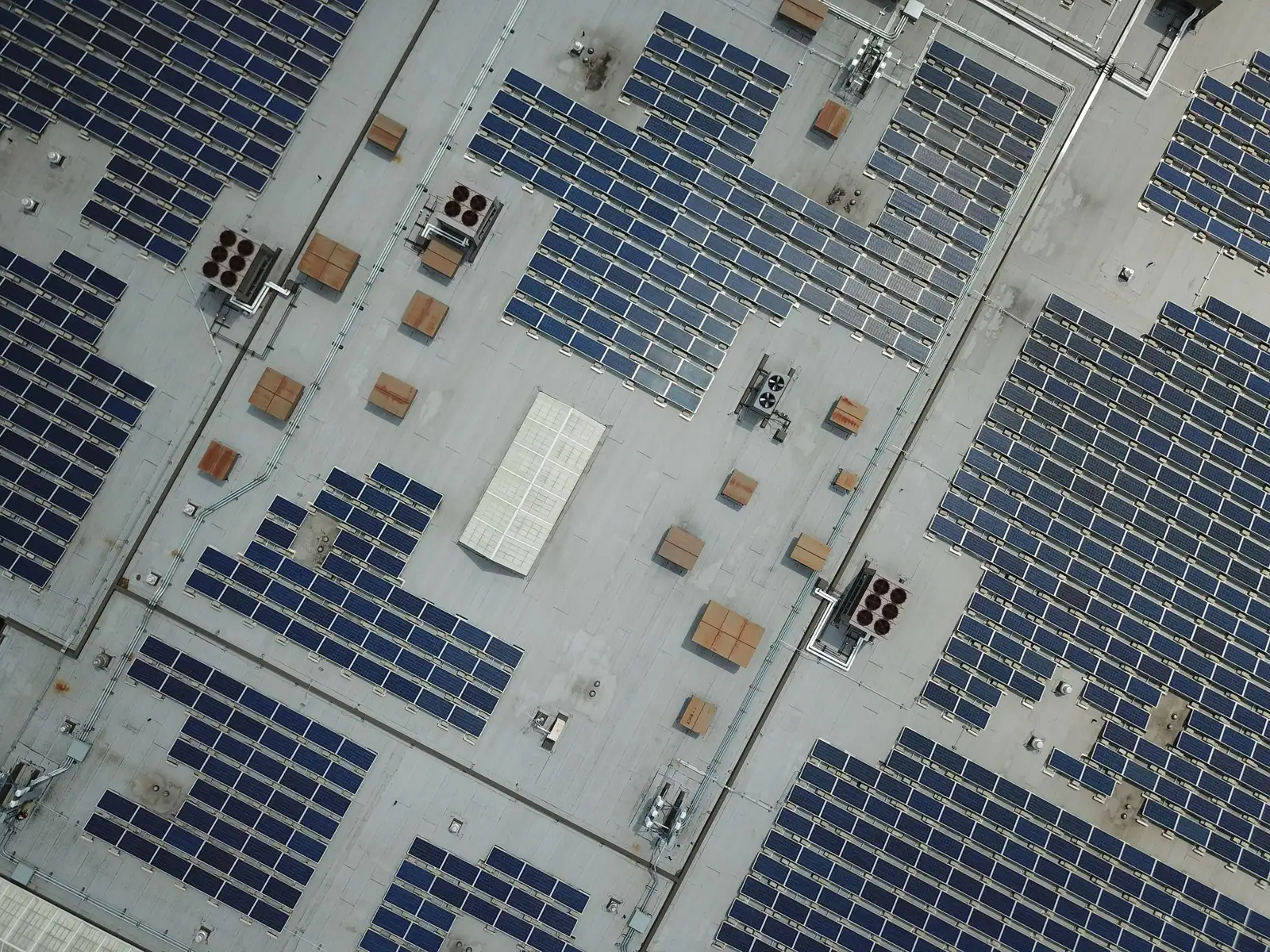
Top-down aerial view of a large grey flat roof covered with groups of solar panels, rooftop cooling units, ducting and small service platforms

Understand Your Investment and Expected Savings

A complete quotation should identify the panels, inverter, mounting structure, protection equipment, cabling, installation and testing included. It should also identify taxes, civil modifications, connection-related charges, battery storage and maintenance that are included or priced separately.

Savings depend on generation, the electricity used directly, applicable export credit, operating costs and the site's billing arrangement. Solar should not be presented as automatically removing fixed charges or maximum-demand charges.

Illustrative calculation only: if the net project investment is ₹10,00,000 and the estimated annual net benefit is ₹2,00,000, simple payback is five years. These are assumed figures for explaining the calculation, not a Heliostrom quotation or generation guarantee. Financing costs, equipment replacement and changes in operating conditions affect the full financial case.

Ask for an estimate tied to your bill and proposed layout rather than a headline saving percentage.

From Site Survey to Commissioning and Support

  1. Assessment and design

    We review consumption, installation space, shade, roof condition and electrical infrastructure, then propose capacity, equipment and responsibilities.

  2. Permissions

    The project plan identifies the applicable TNPDCL process, documentation and approvals, and plans any required shutdown in advance.

  3. Installation and testing

    We complete the agreed structural and electrical work and testing, coordinated with your site’s day-to-day operations.

  4. Handover and maintenance

    Commissioning, monitoring and safe operation are explained at handover, with warranty terms, support contacts and the agreed cleaning scope.

For Chennai properties, the survey also considers coastal exposure where relevant, roof access and space needed for water tanks or other services. Share your exact address so visit availability and service arrangements can be confirmed.

Customer reviews

What Heliostrom Customers Say

Feedback on the advice, installation coordination and support involved in working with Heliostrom.

  • “After comparing four solar companies in Chennai, we chose Heliostrom for our office. The entire process from site visit to TANGEDCO net metering was managed by their team.”

    Suresh Rajan

    Anna Nagar, Chennai

  • “Got three quotes from different installers. Heliostrom was the only one who visited the site twice before finalising the design. That thoroughness made us choose them.”

    Priya Chandrasekaran

    T. Nagar, Chennai

  • “Heliostrom was the only company that gave us an honest assessment of realistic savings — no overselling. Bills reduced every single month.”

    Meena Subramanian

    Tambaram, Chennai

  • “The government subsidy process was completely handled by Heliostrom. Very professional team.”

    Lakshmi Venkataraman

    Velachery, Chennai

Chennai Solar FAQs and Site Assessment

Ready to understand what solar could do for your site? Share your location, property type and electricity requirement. Heliostrom will use these details to begin the assessment and explain the next steps.

Start with electricity consumption, daytime demand, usable installation space and connection details. Capacity is confirmed after a site survey and design assessment rather than from the electricity bill amount alone.

It may be possible after structural condition, roof material, load capacity, access and electrical integration are assessed. Any strengthening or roof repairs should be identified before installation.

A standard grid-connected inverter shuts down when the grid fails. Backup needs a suitably designed battery or other approved backup arrangement; it is not included automatically.

Timing depends on capacity, design, equipment availability, site work and utility approvals. The proposal should separate installation time from the full approval and commissioning schedule.

No. Residential assistance depends on the relevant scheme and eligibility. Commercial and industrial proposals should be evaluated separately without assuming a household subsidy applies.

Site assessment enquiry

We use your details to respond to this enquiry

Call +91 95516 87608 or discuss your requirement on WhatsApp (opens in a new tab). Share your recent electricity bill during follow-up so the proposed system can be assessed against actual usage.