
Home solar for independent houses and villas in Chennai

Residential Solar System in Chennai

The right residential solar system in Chennai depends on your electricity consumption, usable rooftop and whether you need backup during a power cut. Heliostrom helps homeowners compare capacity and system types before preparing a proposal suited to the property.

  • Sized from your bills and daytime use, not roof size
  • On grid or hybrid backup explained clearly
  • Survey, documentation, installation and support
Free site check

Get your home solar estimate

Your home type
  1. Survey
  2. Proposal
  3. Installation
  4. Handover
  5. Support

A good decision begins with recent electricity bills and a clear picture of daytime use. Air conditioning, water pumps, work-from-home equipment and occupancy patterns can affect the design. Our home solar installation service (opens in a new tab) explains how the project moves from survey to installation and support.

Use this page to understand the choices, then share your location and bills for a home-specific assessment. Roof space alone is not a reason to select a larger system.

How Much Solar Does Your Home Need

Start with electricity consumed in units, rather than the bill amount alone. A bill may contain fixed charges, adjustments or a billing period that makes a direct comparison misleading. The assessment also considers when the household uses electricity.

Inputs and how each helps select the system
InputHow it helps select the system
Recent bills across the yearShows average use and seasonal changes
Daytime occupancy and appliancesHelps estimate direct use of solar generation
Shade-free roof and accessDetermines a workable layout and maintenance space
Sanctioned load and phase detailsIdentifies connection and electrical requirements
Essential backup loadsEstablishes battery capacity and backup duration if needed

Capacity is measured in kilowatts, while electricity generated or consumed is measured in kilowatt-hours, often called units. A system's rated capacity is not the amount it produces in every hour. Weather, shade, orientation, equipment and losses affect output.

For a larger household requirement, explore the 10kW solar plant (opens in a new tab), while recognising that a smaller system may be a better fit after assessment.

On Grid or Hybrid Which Suits Your Home

On grid solar

An on-grid system works with the electricity grid and normally does not include battery storage. It can be suitable when bill reduction is the main objective and the household does not require solar backup during grid outages. Surplus generation is handled under the approved connection and billing arrangement.
Hybrid solar and selected load backup

A battery-supported system can be designed to supply selected loads during an outage. The proposal must identify which circuits are supported, the inverter output and the battery capacity. Backup for lights and fans is a different requirement from running air conditioners or pumps for several hours.

Comparison
On gridHybrid with suitable backup design
Battery storageNormally not includedIncluded as specified
Operation during grid failureStandard inverter shuts downCan support agreed backup circuits
Main selection questionHow much generation can the home use?Which loads need backup and for how long?

Avoid choosing a battery only by its advertised capacity. Discuss usable energy, power limits, warranty conditions and replacement costs.

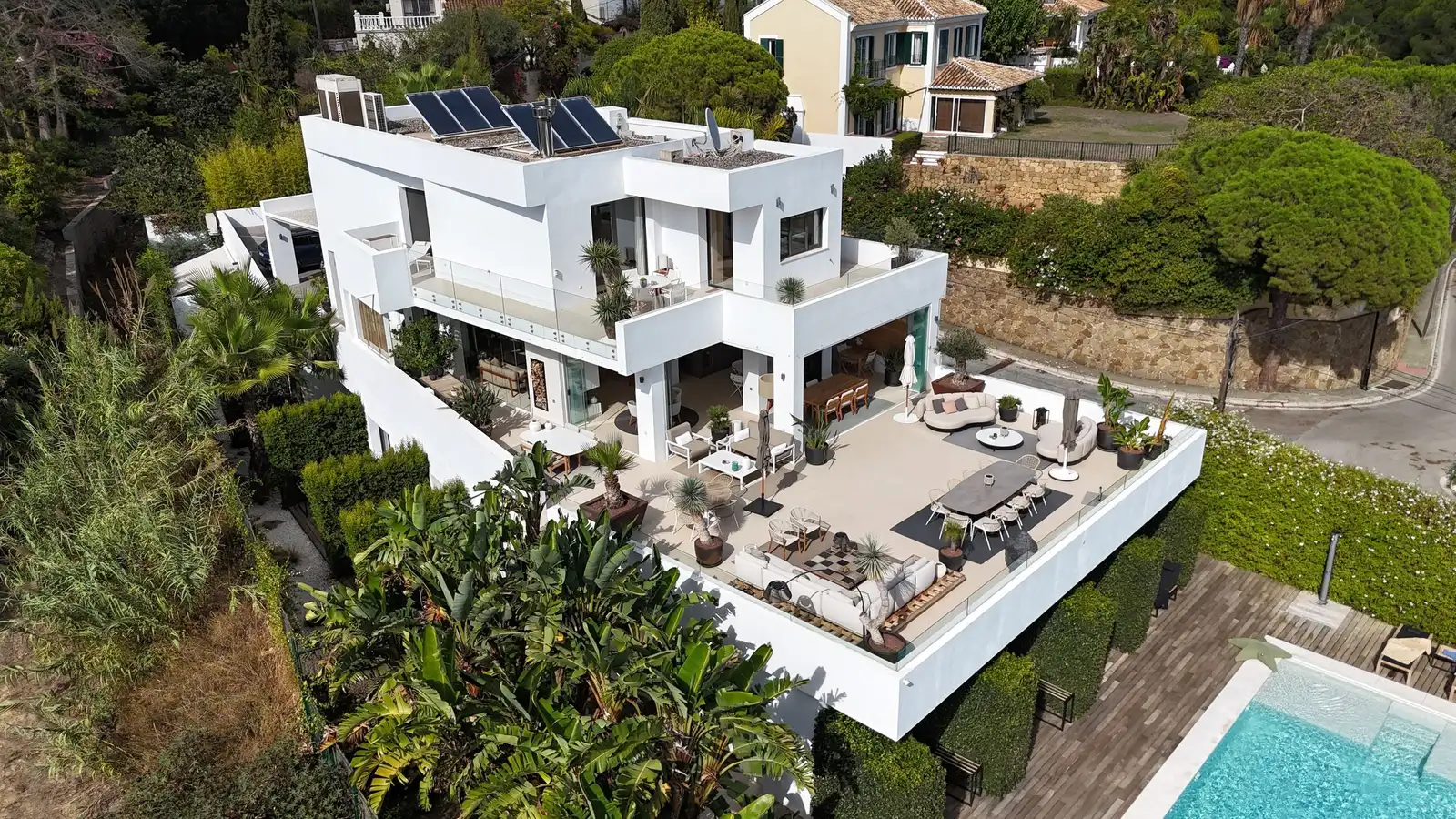
Aerial view of a white modern villa with a large terrace and a small group of solar panels on its flat roof, surrounded by trees

Understand Cost Eligibility and Payback

The home solar quotation should identify panels, inverter, structure, cabling, protection, installation and commissioning. It should also state whether taxes, utility charges, roof repairs, battery storage and maintenance are included.

Eligible residential rooftop installations may receive support under PM Surya Ghar. The applicable amount and process must be checked for the household, capacity, equipment and current scheme conditions. Ask separately about any state assistance; do not assume a proposed or advertised benefit has been approved for your application. Refer to the official TNPDCL solar guidance (opens in a new tab) for the current application route.

Payback should use the net investment and realistic annual net savings. For illustration, an assumed ₹2,00,000 net investment and ₹40,000 annual net saving gives a simple payback of five years. This is a calculation example, not a market price, subsidy entitlement or guaranteed return.

Ask the team to explain generation, self-consumption, export treatment, maintenance and financing assumptions before comparing quotations.

Your Installation and Long Term Support

  1. Survey and proposal

    We check roof condition, shade, usable space, electrical details and access, keeping tanks and drainage reachable.

  2. Documentation

    The plan sets out the applicable application route, permissions and documents before work starts.

  3. Installation

    Installation follows the approved design, with suitable mounting, protection, earthing and tidy cabling.

  4. Commissioning and handover

    Testing, inspection and connection lead to handover of monitoring, shutdown steps and warranty terms.

  5. Maintenance and roof use

    Cleaning, inspections and inverter checks are agreed in the service plan. Apartments should confirm roof rights first.

Customer reviews

What Heliostrom Customers Say

Feedback on the advice, installation coordination and support involved in working with Heliostrom.

  • “Young and professional team. Advised me with the correct requirements and completed on time.”

    Dr. Palanivasan

    Vadapalani, Chennai

  • “The government subsidy process was completely handled by Heliostrom. Very professional team.”

    Lakshmi Venkataraman

    Velachery, Chennai

  • “Heliostrom was the only company that gave us an honest assessment of realistic savings — no overselling. Bills reduced every single month.”

    Meena Subramanian

    Tambaram, Chennai

  • “From the first WhatsApp message to the final handover, every step was smooth. The generation monitoring app they set up lets me track savings live.”

    Nithya Krishnan

    Mylapore, Chennai

Home Solar FAQs and Site Survey

Ready to compare the right options for your home? Share your Chennai location, recent electricity bill and whether backup is required. We will explain the assessment inputs and next steps for a system-specific proposal.

The right size depends on annual consumption, daytime usage, available roof, shading and connection details. A site-specific assessment is more reliable than choosing capacity from the number of bedrooms.

A standard on-grid inverter shuts down when grid power fails. Selected-load backup requires a suitable inverter, battery and electrical arrangement designed for that purpose.

It may reduce purchased electricity, but fixed charges, night-time imports and other billing items can remain. Savings depend on consumption, generation and the approved billing arrangement.

Solar panels can generate in diffuse daylight, but output is lower and varies with conditions. An annual estimate should account for seasonal weather and system losses.

It depends on panel dimensions, layout, shade, orientation, setbacks and access routes. The site survey should confirm usable area before a capacity is selected.

The layout should preserve agreed access and space for essential roof services. Discuss water tanks, drainage, maintenance routes and future roof work during the survey.

Get My Home Solar Estimate

We use your details to respond to this enquiry

Call +91 95516 87608 or discuss your requirement on WhatsApp (opens in a new tab). Share your recent electricity bill during follow-up so the proposed system can be assessed against actual usage.