
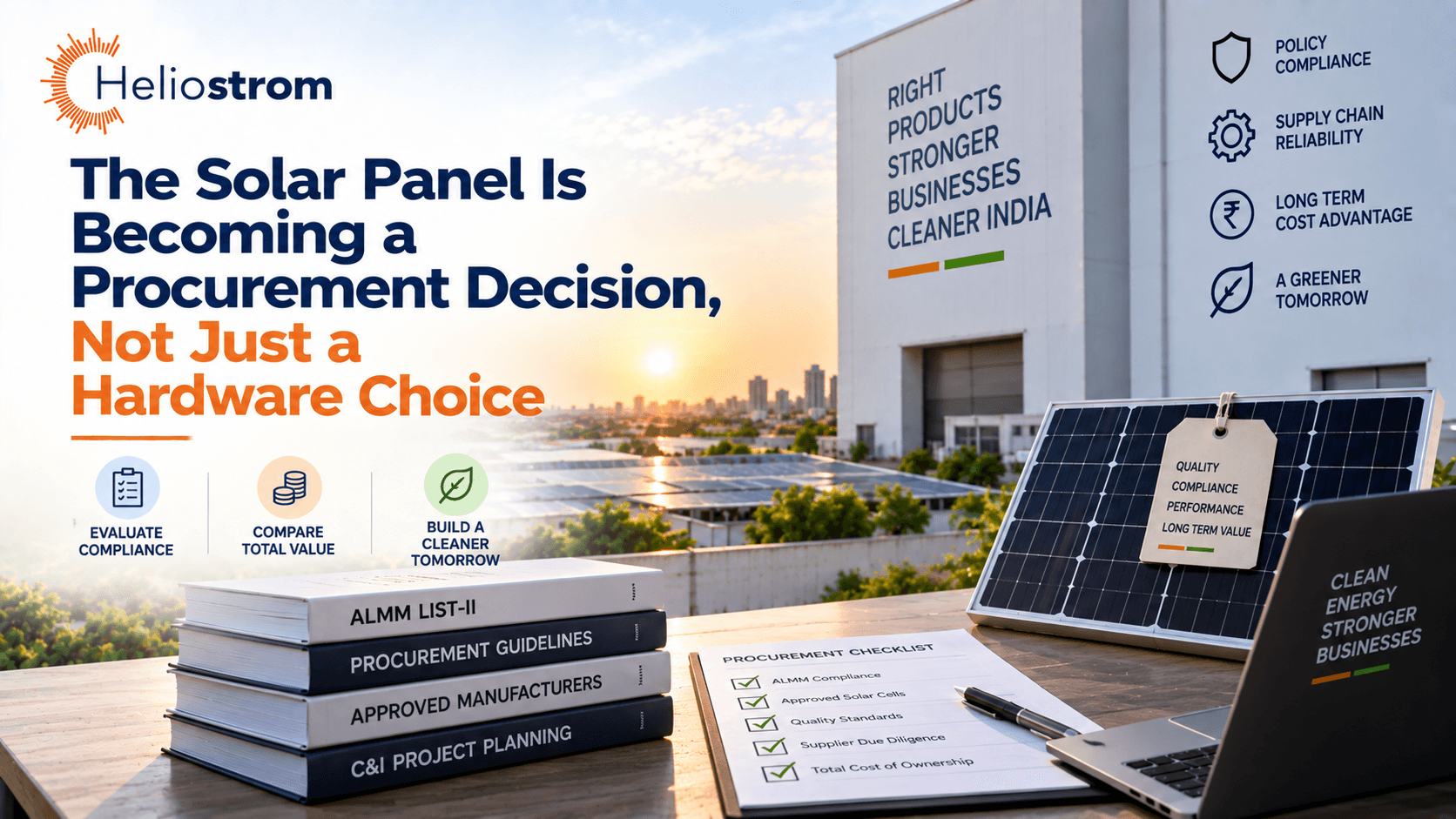
Buying a solar panel used to be a fairly simple comparison of price per watt and brand reputation. That is changing quickly. Between government approval lists, subsidy eligibility rules, warranty terms tied to a manufacturer's financial standing, and net-metering paperwork, choosing a panel now looks a lot more like a procurement decision than a straightforward hardware purchase. Working with a solar energy company in Chennai that understands these moving parts has become as important as the panel specification sheet itself.
Why a Solar Panel Purchase No Longer Ends at the Price Tag
A few years ago, most buyers compared solar quotes mainly on cost and wattage. Today, several other factors can determine whether a system meets the applicable scheme requirements, whether it can be connected to the grid, and whether a warranty will still mean anything a decade from now.
This shift mirrors what has already happened in other equipment-heavy industries, where buyers eventually learned that the lowest quote and the best long-term outcome are not always the same thing. Solar is now going through that same transition, driven largely by policy changes rather than a change in the underlying technology itself.
Compliance Now Shapes Which Panels Qualify
In India, the Ministry of New and Renewable Energy, known as MNRE, maintains the Approved List of Models and Manufacturers, commonly called ALMM. List I covers finished solar modules and applies to categories including government projects, government-assisted projects, government schemes, open access projects, and net-metering projects. List II, covering the solar cells used inside those modules, came into force from June 2026 for net-metering and open access projects. MNRE has since described a further window, running until December 31, 2026, as a limited case-by-case allowance for commissioning specific net-metering and open-access projects, rather than a general extension of the List II requirement.
For projects to which the applicable ALMM requirements apply, module and cell eligibility can affect whether the project meets the relevant regulatory, scheme, or grid-connection requirements. Not every private or residential installation automatically falls under every ALMM category, which is why confirming applicability to a specific project matters more than assuming a blanket rule.
These lists are also revised on a rolling basis rather than published once and left unchanged. A panel model's listing status can shift between the time a quote is prepared and the time installation actually happens, which turns a seemingly simple hardware choice into something closer to an ongoing compliance check.
Warranty Terms Depend on Manufacturer Stability
Solar panels typically carry two separate warranties. A product warranty covers physical defects, while a separate performance warranty guarantees that the panel will still produce a minimum share of its original output after a set number of years. Product and performance warranty periods vary by manufacturer and model, and many current products offer long product warranties alongside performance warranties extending for several decades. A manufacturer's financial stability and ability to support customers over the long term can therefore be relevant when evaluating a warranty, since a warranty is more meaningful when the manufacturer has the financial and operational capacity to support claims over the product's expected life.
Total Cost of Ownership Over the Sticker Price
A lower upfront quote can look attractive until it is measured against degradation rates, inverter replacement cycles, and the administrative cost of correcting a compliance issue after installation. Buyers who evaluate a quote purely on cost per watt often miss these long-term factors, which is exactly why the decision now resembles procurement more than a one-time purchase.
Two systems quoted at a similar price can end up with very different lifetime costs once degradation, inverter servicing, and the risk of a rejected subsidy claim are factored in. Comparing quotes on an equal footing usually means asking for the same level of technical and compliance detail from every installer being considered, not just the final number on the invoice.
How the Decision Changes by Building Type
The procurement priorities that matter most tend to shift depending on whether the building is a home, a commercial property, or an industrial facility.
Residential Households Weigh Subsidy Eligibility and Simplicity
For eligible residential projects seeking available subsidy support, an important early step is confirming that the proposed system, vendor, and installation meet the applicable scheme requirements. A well-handled home solar panel installation in Chennai typically means the installer has already confirmed panel eligibility, prepared the paperwork the local distribution utility requires, and set expectations for how long approval usually takes.
Commercial Properties Balance Load Profiles and Payback Periods
Commercial buildings usually have different daytime consumption patterns than homes, which changes how a system is sized and how quickly it pays for itself. Businesses evaluating commercial solar installation services in Chennai tend to focus on matching system capacity to actual operating hours, understanding applicable incentives, regulatory requirements, and electricity-tariff structures, and confirming that the equipment chosen will remain compliant if regulations shift again during a multi-year payback period.
Industrial Facilities Add Load Complexity and Site Constraints
Factories and large facilities carry additional layers of complexity, including sanctioned load, available rooftop or ground area, transformer capacity, and three-phase system design. Businesses researching solar installation for industrial facilities in Chennai generally need a more detailed technical assessment upfront, covering equipment compatibility, compliance, and ongoing operations and maintenance support, since an undersized or poorly specified system is far more costly to correct after a large facility is already running on it.
What to Ask Your Solar Installer Before You Sign
A short list of direct questions can surface most of the procurement risks covered in this article before a contract is finalized:
- Is the proposed module currently listed under the applicable MNRE ALMM category for this project?
- Which exact module model and manufacturer will actually be supplied?
- What happens if the selected model's listing status changes before installation?
- Which approvals and documents are included in the installation scope, and who is responsible for filing them?
- What are the module's product and performance warranty terms, and for how long?
- Who handles warranty claims if an issue arises after installation?
- Is the proposed inverter electrically compatible with the chosen module configuration?
- What assumptions were used for system sizing and expected generation?
What a Procurement Minded Buyer Should Verify Before Signing
A handful of checks tend to separate a straightforward installation from one that runs into delays or disputes later.
Manufacturer Standing on the Current Approved List
Because ALMM lists are revised periodically, buyers should verify the current status of the proposed module and manufacturer against the applicable MNRE list before signing or finalizing procurement. Asking an installer to show, rather than simply state, current listing status is a reasonable step before any contract is finalized.
Inverter and Module Compatibility
Inverters and panels are not universally interchangeable, and mismatched components can reduce system efficiency or complicate a future warranty claim. Buyers should confirm that the inverter's electrical specifications are compatible with the proposed module configuration, including voltage, current, system size, and string design.
Documentation for Net-Metering Approval
Net-metering approval generally requires specific technical documentation submitted to the local electricity distribution company. Missing or inconsistent documentation can create additional back-and-forth and delay the approval process.
Why Documentation Deserves as Much Attention as Equipment
Solar hardware is only one part of what determines how smoothly a project goes. For some projects, administrative issues such as incomplete documentation, subsidy verification, or net-metering requirements can create delays even when the equipment itself is functioning as expected, which is why documentation quality is worth as much attention as the panel specification itself.
What This Shift Means for Buyers Going Forward
None of this means that panel quality or price have stopped mattering. It means they are no longer the only variables worth comparing. As approved manufacturer lists, subsidy rules, and grid connection requirements continue to evolve, a buyer who treats a solar purchase as a procurement decision can evaluate performance, compliance, documentation, and long-term support alongside the initial price.
This does not require every buyer to become an expert in energy policy. It does mean that an installer's ability to track these requirements, rather than only sell equipment, has become a meaningful part of what a buyer is actually paying for.
Conclusion
Choosing a solar panel today involves more moving parts than most buyers expect when they first request a quote. Compliance lists, warranty structures, and connection paperwork can matter as much as the panel's wattage or price. Working with experienced solar panel specialists in Chennai who track these requirements closely can help a homeowner, business, or industrial facility avoid the delays and rejected approvals that a purely price-driven decision can lead to.
Frequently Asked Questions
Why is buying a solar panel now compared to a procurement decision?
Because eligibility for subsidies and grid connection can depend on factors beyond the panel itself, including approved manufacturer lists, documentation requirements, and warranty terms tied to a manufacturer's financial stability, not just price and wattage.
What is the ALMM list and why does it matter?
The Approved List of Models and Manufacturers is maintained by MNRE and identifies eligible solar PV modules under List I and solar PV cells under List II for projects and categories covered by the applicable ALMM requirements, including certain government, open access, and net-metering projects.
How long do solar panel warranties usually last?
Warranty periods vary by manufacturer and model. Many current products combine a multi-year product warranty covering physical defects with a longer performance warranty guaranteeing a minimum level of power output over time.
Does a lower quote always mean a better deal?
Not necessarily. A lower upfront price can be offset by faster degradation, weaker warranty backing, or compliance gaps that delay subsidy approval, which is why total cost of ownership matters as much as the initial quote.
Does the right choice differ for homes, businesses, and factories?
Yes. Homes usually prioritize subsidy eligibility and simple approval, commercial properties focus on matching system size to operating hours and applicable tariff structures, and industrial facilities require more detailed technical planning due to sanctioned load, site constraints, and equipment compatibility.
Ready to claim your subsidy? home solar installation in Chennai or get a free solar quote.


