
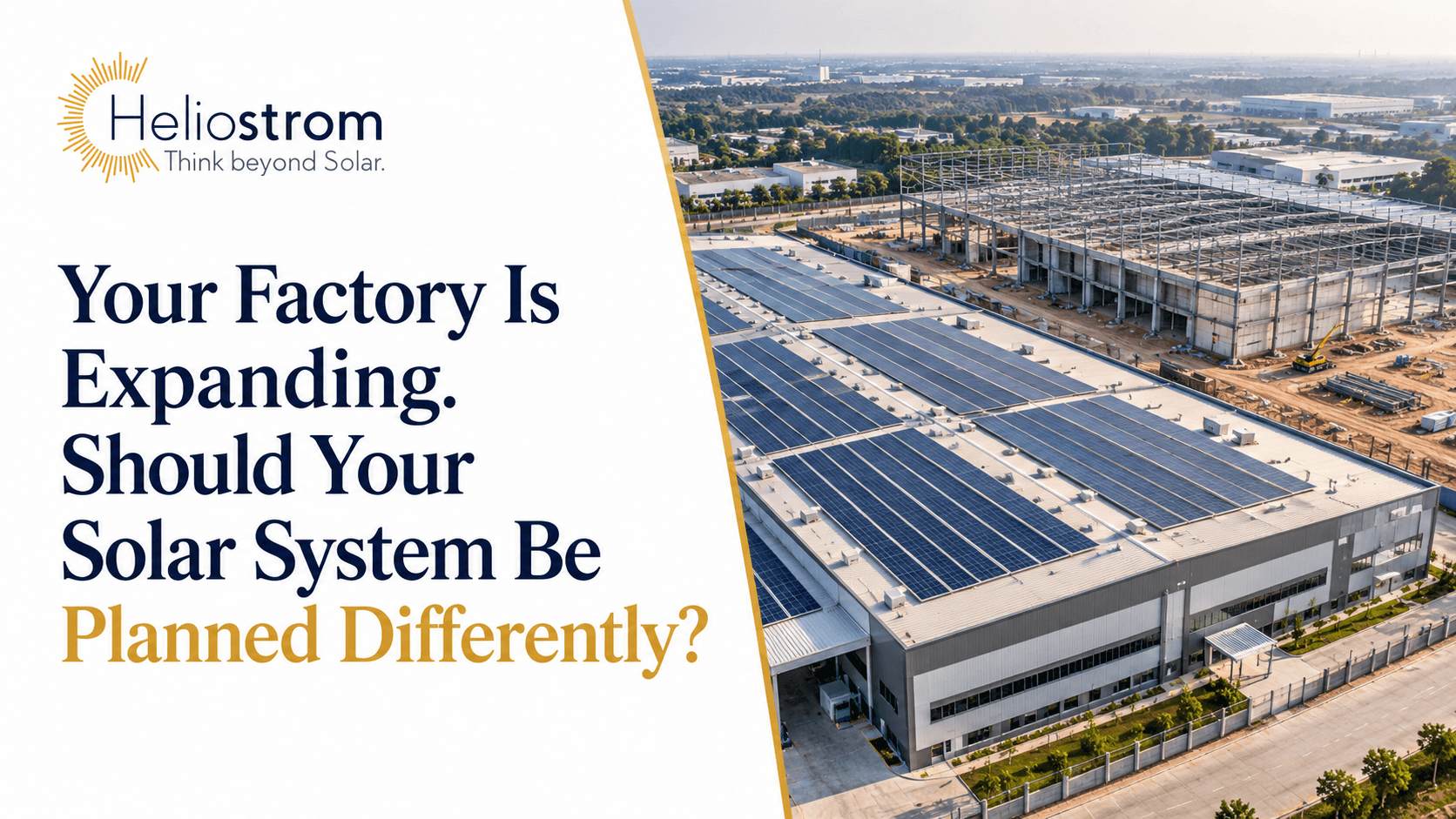
A new production line is on order, the second shed is half built, and someone in finance has asked whether this is the right moment to add solar. It is a fair question. The honest answer is yes, but not in the way you would plan it for a plant that is staying exactly as it is. A rooftop system sized around this year's electricity bill can look undersized within eighteen months, or it can occupy the very roof space your next building needs. Businesses exploring industrial solar planning in Chennai get far better results when they treat growth as a design input rather than an afterthought. This article covers what changes once expansion enters the picture.
Start With Where Your Load Is Heading
Your past bills describe the factory you had. They say very little about the one you are building. The first step is to turn the expansion plan into numbers: new machines, compressors, chillers, furnaces, battery-powered forklifts, and any additional shifts. Ask the production team for a two- to three-year outlook and convert it into connected load and running hours.
Timing matters as much as size. An expansion that adds daytime machinery lines up neatly with solar generation, because the new demand arrives exactly when the panels are producing. An expansion that mainly adds evening shifts changes the balance, and the system design should reflect that from the start rather than being corrected later.
It also helps to fix inefficiencies before sizing the system. If the new line will use efficient motors, drives, and lighting, the real demand may be lower than a simple headcount of machines suggests. Sizing solar against wasteful consumption means paying for capacity you may not need once the plant is tuned. A short energy audit, done while the expansion is still on paper, is usually cheap compared with the cost of correcting an oversized system later.
Sanctioned Load Is the Quiet Limit on Solar Size
In Tamil Nadu, the rooftop capacity you can connect is generally limited by your sanctioned load or contracted demand, and by what the local distribution transformer can safely accept. For a growing factory, that creates a sequencing problem. If the solar application goes in before the load enhancement is approved, the capacity may be capped at your old limit, and you could end up applying again for the extra kilowatts.
It usually pays to raise the load enhancement and the solar application together, and to speak to the utility early about transformer capacity. Recent guidance from the Ministry of New and Renewable Energy has also addressed one common snag. Applications were being returned when the DC capacity of the modules slightly exceeded the applied capacity, and the guidance clarifies that a small tolerance is acceptable as long as the inverter's AC capacity stays within the permitted limit. Since local utility practice can differ, confirm how it is applied in your case.
Design the First Phase So the Second Phase Is Easy
The cheapest time to prepare for growth is before the first panel goes up. Most of what makes a later addition painful is invisible on day one.
Reserve Space on the Roof and in the Electrical Room
Mark the roof areas intended for phase two on the layout drawing and keep them clear of other equipment. Size the cable trays and conduits with spare capacity, and ask for switchgear and busbars rated for the eventual system rather than the initial one. Leave floor space for additional inverters or a future battery cabinet. Retrofitting any of these later means shutdowns, and shutdowns in a working factory are expensive.
Choose Modular Equipment
Several mid-sized string inverters give you more flexibility than one very large unit, because new blocks can be added without replacing what already works. They also limit the damage if one unit trips. Panel models change quickly, and the wattage and dimensions available in two years will not match today's, so keep the second phase on its own inverter inputs instead of mixing old and new modules on the same string.
Match the Layout to the Buildings You Are About to Build
Expansion changes the roofline. A new, taller block can cast long shadows over an older roof, so the solar layout should be drawn against the full master plan, not only the current building drawings. If you are briefing solar companies in Chennai, share the future site plan on the first visit.
Roof type matters too. Metal sheet roofs often allow clamp-on mounting without drilling, while older concrete or asbestos-sheet roofs need a structural check and sometimes a replacement. There is little sense in placing a 25-year asset on a roof that will need re-sheeting in five. Where roof space runs out, carports and open ground can take the next phase.
Metering Rules Can Treat Added Capacity Differently
This is the point many plant owners learn too late. In the past, the Tamil Nadu regulator has directed that applications for additional rooftop capacity follow a different billing method from the original net metering arrangement. In practice, added capacity is generally assessed under the rules in force at the time of the new application, not automatically under the original agreement. Rules have been revised since, but the lesson holds: a second phase is not always treated like the first. Ask the utility how added capacity would be metered and settled today, and factor the answer into the decision on how much to build at the outset.
Power Quality and Backup Deserve a Second Look
Expansion often brings variable frequency drives, larger motors, and sensitive automation. These can introduce harmonics and voltage fluctuations that the original system never had to cope with, so ask whether the inverters and protection settings suit the new load. Backup is another point of confusion. A standard grid-connected solar system shuts down during a grid outage for safety reasons, which means panels alone will not keep a new critical process running. If the expansion adds equipment that cannot tolerate interruption, discuss generator synchronisation or battery storage during the design stage, not after the first outage.
What Phased Planning Looks Like in Practice
Consider an illustrative case. A plastics unit has a sanctioned load of 200 kW today and expects it to reach 350 kW within two years. Applying for solar against the current limit would cap the system early. Instead, the owner files for the load enhancement first, builds a first phase sized to the confirmed daytime demand, and reserves the roof of the planned warehouse for the next block. The cable routes, switchgear, and inverter room are sized for the final layout from day one. When the second line starts, adding panels becomes a matter of weeks rather than a fresh project.
Maintenance and Safety Across Both Phases
A larger roof needs safe access. Plan walkways, lifelines, and cleaning routes into the layout so that technicians can reach every array without stepping on panels or fragile sheets. Dust from new construction settles on modules quickly, so cleaning frequency may need to rise during the build period. Finally, make sure the operations and maintenance contract covers both phases under one agreement, with performance tracked on the same dashboard. Split responsibility between two vendors is where underperformance tends to go unnoticed.
Phasing the Investment Without Losing the Tax Benefit
Many businesses prefer to stage solar spending alongside the expansion budget. That works, but the commissioning date of each phase matters. Accelerated depreciation of up to 40% is generally available in the first year for eligible commercial and industrial solar assets, and claiming the full amount typically requires the system to be in use for at least 180 days during that financial year. A phase commissioned late in the year may qualify for a reduced claim. The benefit can also depend on your tax regime, since businesses that opt for the concessional corporate tax rate generally cannot claim it. Plan the schedule early and confirm the current treatment with your chartered accountant before relying on it.
Questions Worth Asking Your Solar Partner
A good proposal for a growing plant should answer these without hesitation:
- Which sanctioned load and transformer capacity does the design assume?
- How much roof and electrical space has been reserved for phase two?
- Can the next phase run on separate inverter inputs?
- How will warranties and performance guarantees apply across both phases?
- Will one monitoring dashboard cover the whole installation?
Build Bigger Now or Add Later?
There is no universal answer, but there is a sensible middle path. Install what your confirmed load can use, and build the infrastructure for everything else. Oversizing for speculative growth is risky, because surplus that cannot be used on site is credited under net billing or banking arrangements at a rate generally well below the retail tariff you pay for grid power. On the other hand, repeating approvals, site mobilisation, and shutdowns for every small addition adds cost of its own. Confirmed demand justifies capacity. Probable demand justifies space and spare ratings. That simple rule keeps the first investment lean while protecting every option you may want in three years.
If your expansion plan is already on paper and you want to see how solar fits around it, you can contact our solar team for a load review and a phased design that grows with your plant.
Running the numbers for your business? commercial solar installation in Chennai or request a solar quote.


