
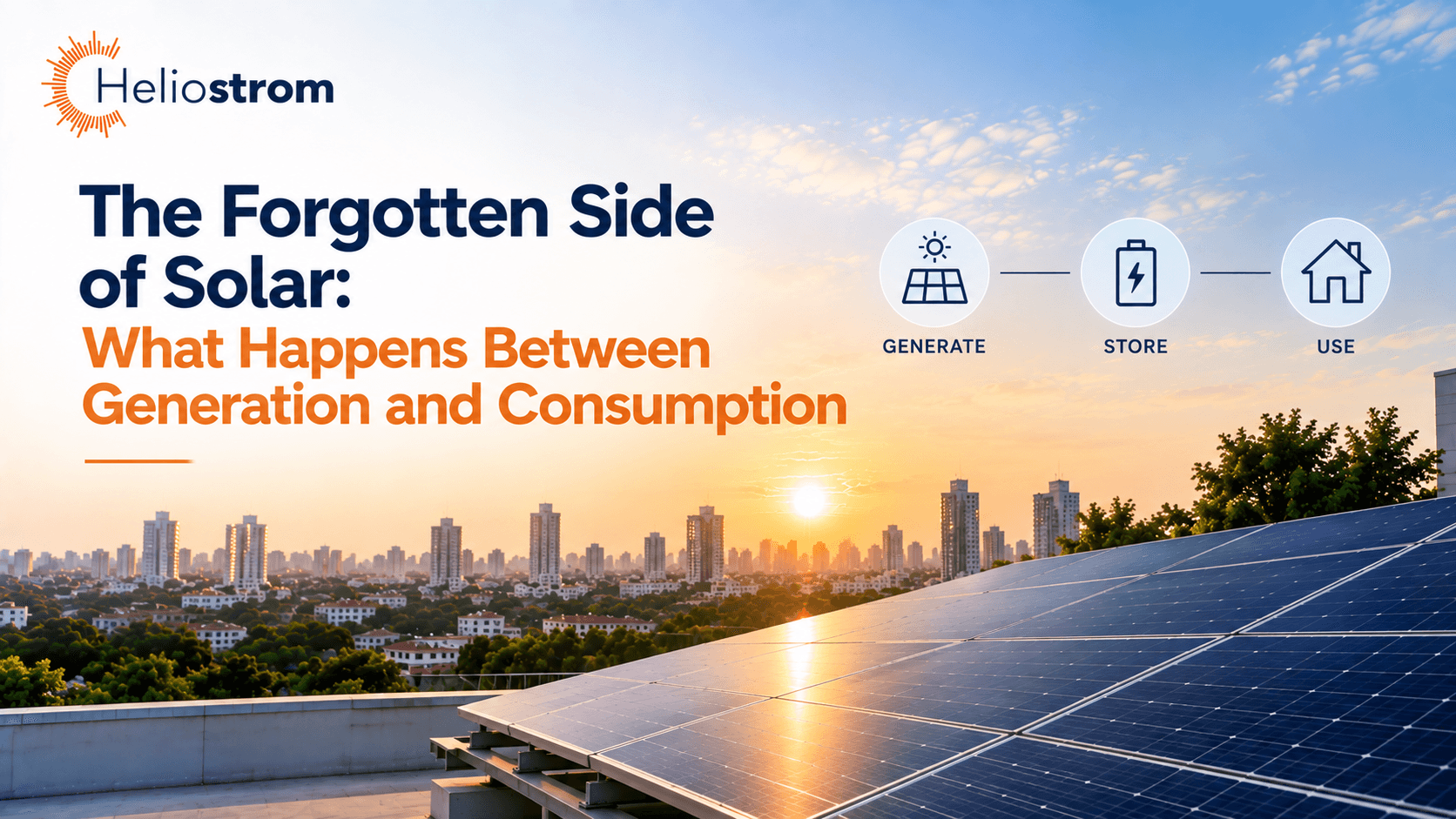
Most conversations about solar energy stop at two points: the panel that captures sunlight and the electricity bill that shrinks because of it. What happens in between rarely gets discussed, yet it is this middle stretch, conversion, synchronization, storage and distribution, that strongly influences how much of that captured sunlight ultimately becomes usable electricity. Anyone evaluating Solar Power Plants in Chennai for a home or a factory floor benefits from understanding this hidden journey, because it directly affects savings, reliability and the size of system that actually makes sense.
This article walks through the technical and practical steps that occur after sunlight strikes a panel and before that energy powers a fan, a machine, or a server rack. It is written for homeowners, business owners and facility managers who want a clearer, non-technical picture of what they are actually paying for.
From Sunlight to Usable Electricity: The Hidden Journey
DC Generation at the Panel Level
Solar panels do not produce the same type of electricity that runs through household wiring. Photovoltaic cells generate direct current, or DC, which flows in a single, steady direction. Most conventional household and commercial equipment, lighting, motors, computers, air conditioners, is designed to receive AC power rather than the variable DC output produced directly by a solar array. That single fact is the starting point for everything else that happens next.
The Role of the Inverter
The inverter is the component that converts DC into alternating current, or AC, the form of electricity used by the grid and by nearly every appliance. Beyond conversion, modern inverters use maximum power point tracking, commonly known as MPPT, to continuously optimize the electrical operating point of the array as irradiance and temperature change throughout the day. Many inverters also communicate system health data back to the owner or installer. Without it, a rooftop system is little more than a collection of glass and wiring with no way to deliver power anywhere useful.
String, Micro and Hybrid Inverters
String inverters handle a group, or string, of panels together and are common in residential and small commercial setups because of their lower cost. Microinverters can reduce the impact of module level shading, since each panel operates through its own inverter rather than sharing one string level conversion path, and power optimizers offer a similar module level benefit while still routing through a central inverter. Hybrid inverters combine grid-tied conversion with battery charging, allowing a single unit to manage solar input, battery storage and grid interaction, though the exact operating modes available depend on the inverter architecture and system configuration. The right choice depends heavily on roof layout, shading patterns and whether battery backup is part of the plan, which is why a proper site assessment is worth more than picking equipment off a spec sheet.
Grid Synchronization and Real Time Balancing
Frequency and Voltage Matching
Once electricity is converted to AC, it still cannot simply be pushed into the grid. The inverter has to remain within the grid's specified voltage and frequency limits and synchronize appropriately before exporting any power. A significant deviation can trigger automatic protective shutdowns designed to prevent damage to grid equipment or to the inverter itself. This is one reason grid-tied inverters are certified against strict technical standards before they are allowed to connect to public infrastructure.
What Happens When Supply Outpaces Demand
Midday generation often exceeds what a building is using at that exact moment, particularly on clear days when offices or homes are only partially occupied. That surplus does not vanish. Depending on the system design, it is either exported to the grid, redirected into a battery, or in some configurations curtailed slightly to avoid overloading local distribution lines. Utilities monitor this balance closely, because too much unplanned generation flowing into a local feeder can push voltage beyond safe limits, which is one of the technical constraints that shapes how much rooftop solar a given feeder can accommodate.
Storage: The Missing Link Between Peak Generation and Peak Use
Why Batteries Matter
Solar generation peaks around midday, while household and commercial electricity use often peaks in the morning and evening. This mismatch is the core reason storage exists. A battery bank charges from surplus daytime generation and discharges later when the sun has gone down or when clouds reduce output. Some energy is lost during each charge and discharge cycle, and usable battery capacity gradually declines with age and use, both of which are worth factoring into any storage payback calculation. For anyone comparing a straightforward grid-tied system against a battery-backed one, this timing gap is usually the deciding factor, especially in areas where outages are common or evening usage is high.
Net Metering and Feed-In Arrangements in Tamil Nadu
In Tamil Nadu, the treatment of exported rooftop solar depends on the applicable metering framework, consumer category and connection date. Current TNPDCL guidance distinguishes between earlier net metering arrangements and newer net feed-in arrangements, so the exact settlement mechanism, and therefore the project economics, should be checked against the rules that apply to a specific connection rather than assumed from a general rule of thumb. For businesses exploring Commercial Solar for Chennai facilities, larger industrial consumers may also evaluate open access or power purchase agreement structures alongside metering options, depending on their eligibility, applicable tariffs and overall project economics.
What Happens During a Cloudy Spell or Sudden Shading
Cloud cover, dust buildup, or shading from a nearby structure does not simply lower output evenly. In string connected arrays, shading on one or more modules can reduce the output of the affected string, though bypass diodes, thoughtful string design, power optimizers and microinverters all help limit how far that impact spreads. Panel placement and an appropriate cleaning schedule can therefore have a meaningful effect on system performance over time, which is worth discussing during the initial design of a system rather than after installation.
Why This Middle Stage Matters for Homes and Businesses
Residential Systems
For a house, the gap between generation and consumption can result in more electricity being exported than the owner expects, with the financial value of that surplus depending on the settlement mechanism that applies to the connection. A well-planned Solar Panel Installation accounts for actual daily consumption patterns rather than just rooftop area, which avoids paying for capacity that delivers less value back than expected.
Commercial and Industrial Systems
Factories and offices tend to have steadier daytime loads, which often aligns better with solar output than residential use does. Even so, machinery start-up spikes, shift changes and seasonal production variation can create the same generation-versus-consumption mismatch seen in homes, just at a larger scale. This is why load studies, not just roof measurements, are a standard part of sizing commercial arrays properly.
Monitoring: Seeing the Middle Stage in Real Time
Most modern inverters pair with a monitoring app or dashboard that shows generation, consumption and export figures throughout the day. This visibility turns an otherwise invisible process into something a homeowner or facility manager can actually track, making it easier to spot an underperforming panel, a shading issue, or a slow decline in output long before it shows up as an unexplained jump in the electricity bill.
The Role of Component Quality in This Invisible Process
Several factors, including conversion efficiency, inverter performance and long-term module degradation over the warranty period, affect how much usable electricity a system ultimately delivers, and all of them trace back to the quality of the equipment installed at the start. Reviewing the background of established solar installation experts in Chennai gives a useful sense of build quality, testing standards and after-sales support, factors that matter far more once a system is running than they do on a brochure. Efficiency rating is only one point of comparison. Warranty terms, degradation specifications, temperature coefficient, certifications and long-term field performance data can influence the value a system delivers just as much as its headline efficiency number.
Conclusion
Solar power is rarely as simple as sunlight in, electricity out. Between generation and consumption sits a chain of conversion, synchronization, and sometimes storage, each link affecting how much value a system actually delivers. Understanding this middle stage helps homeowners and business owners ask better questions before signing off on a project, rather than judging a proposal purely on panel count or headline savings figures. For a site-specific assessment of how this process would work for a particular roof or facility, it helps to Contact Us and walk through consumption patterns, roof orientation and available metering options with someone who can map the full journey, not just the starting and ending points.
Frequently Asked Questions
Why does my solar system produce more power than I use during the day?
Most homes and offices use less electricity around midday than a solar system generates at peak sun hours. The surplus is typically exported to the grid under net metering, stored in a battery if one is installed, or in rare cases curtailed if the local grid cannot accept more input at that moment.
Do I need a battery if I already have net metering?
Not necessarily. Where the applicable metering arrangement allows exported electricity to offset or receive value against later consumption, a battery may add less financial benefit, particularly in areas where outages are rare. A battery becomes more valuable in areas with frequent power cuts or when a household or business wants guaranteed backup regardless of grid status, and its case should be evaluated against the specific metering rules that apply to that connection.
What causes a solar inverter to shut down unexpectedly?
Inverters are designed to disconnect automatically if grid voltage or frequency moves outside a safe range, or if the grid itself goes down. This behavior, known as anti-islanding protection, helps prevent a grid-tied system from continuing to energize a disconnected section of the network, which protects utility workers during outages. Overheating, firmware faults and loose wiring connections can also trigger a shutdown, which is why routine maintenance checks matter.
How long does it take for stored solar energy to be used after generation?
In a battery-backed system, stored energy can respond very quickly to changes in electrical demand, subject to the inverter and system configuration, which is generally faster than bringing a fuel-based backup generator online. Where no battery is installed, exported energy is credited or settled according to the applicable metering arrangement rather than physically stored, and equivalent units are drawn back from the grid whenever needed.
Does the distance between the panel and the inverter affect performance?
Longer DC cable runs between panels and inverters introduce some resistance and a small voltage drop, which is why correctly sized conductors and thoughtful cable routing are part of a properly engineered installation. A well-designed system keeps these losses small enough that they rarely affect overall output in a meaningful way.
Thinking about your own installation? rooftop solar installation for homes in Chennai or book a free site survey.


