
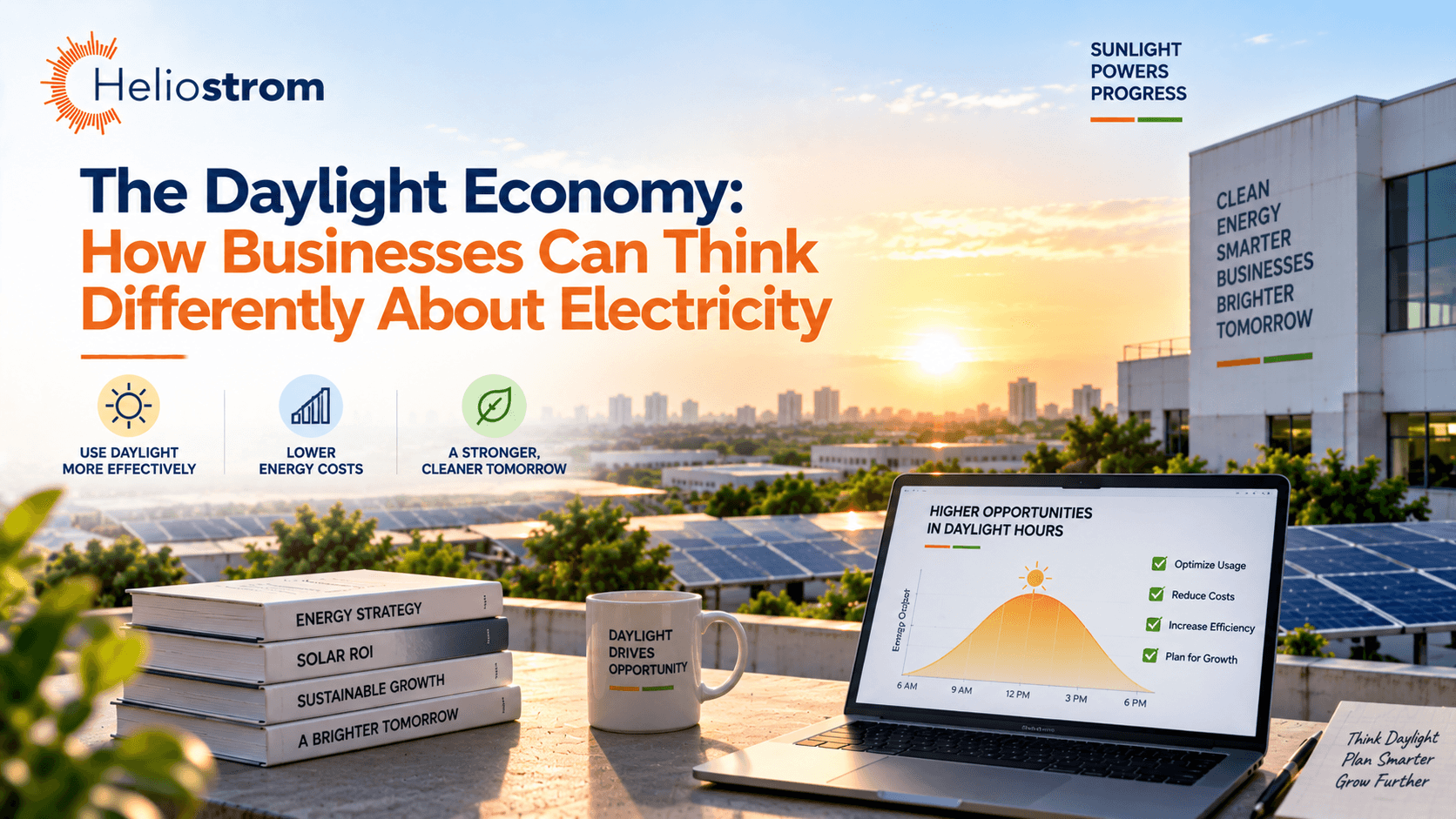
For most companies, electricity is treated as a fixed monthly cost, a line item that arrives whether the factory floor is running at full capacity or the office is empty over the weekend. Many businesses consume a substantial share of their electricity during daylight operating hours, which can overlap with the period when a solar system is generating power. That overlap is what some energy planners now describe as the daylight economy, and it is changing how businesses approach industrial solar installation services in Chennai, along with their broader approach to energy planning.
What Is the Daylight Economy?
The daylight economy is not a formal economic theory. It is a practical way of describing how business activity and solar generation often share the same window of time. Offices open, machines start, retail stores unlock their doors, and kitchens begin service largely within daylight hours. Solar panels generally generate the most electricity during the stronger daylight hours, with output varying by season, weather, system orientation, and site conditions. When a business generates part of its own power during the hours it needs electricity, it can reduce how much it draws from the grid and start treating sunlight as a working input, similar to raw material or labor.
This is a departure from how electricity has traditionally been viewed. Power has long been seen as something purchased in bulk from a utility, priced the same whether it arrives at noon or midnight. The daylight economy reframes that thinking by asking a simple question: if a business runs on sunlight hours anyway, why should it not run on sunlight itself?
Why Operating Hours and Sunlight Hours Often Overlap
Many manufacturing, retail, office, and processing operations have substantial daytime electricity demand, although the exact load profile varies by business and shift pattern. Some facilities run multiple shifts, including overnight operations, while others operate strictly within business hours. Solar irradiance in southern India generally rises through the morning, peaks around midday, and tapers by late afternoon. For a business with a daytime-heavy load, this pattern is worth examining closely, since understanding exactly when electricity is consumed is what determines how useful solar generation will actually be.
The Real Cost of Relying Entirely on the Grid
Businesses that rely heavily on grid electricity remain exposed to changes in electricity tariffs and, depending on the site and network, potential supply interruptions.
Energy Charges and Demand-Based Components
For eligible commercial and industrial consumers, the electricity bill can include both energy-related charges and demand-related components. Solar can reduce the amount of electricity purchased from the grid, while its effect on demand charges depends on the applicable tariff structure and when the facility records its peak demand. Understanding a site's specific tariff category is a necessary step before estimating how much a solar system can realistically save.
Outages and Unplanned Downtime
Grid interruptions can translate into lost production time for manufacturers and lost transactions for retail and service businesses. Grid-connected solar by itself does not provide backup power during an outage, since most grid-tied systems shut down automatically for safety when the grid goes down. Businesses seeking resilience during outages may need batteries, backup generation, or an appropriately designed hybrid system alongside their solar installation.
How Different Businesses Are Applying Daylight Thinking
Factories and Manufacturing Units
For manufacturing, the daylight economy is most visible on the shop floor. Machinery, compressors, and processing lines that run through the day make commercial and industrial solar power setups in Chennai worth evaluating for cutting operating costs without changing production schedules, particularly where the load profile aligns with daylight hours.
Matching Machinery Load With the Generation Curve
Effective industrial solar setups are sized against actual daytime load patterns rather than rooftop area alone. A plant running heavy machinery for most of the working day benefits from a system engineered around that specific consumption curve, since this improves how much of the generated energy is used directly on site.
Offices, Retail Outlets, and Commercial Establishments
Offices and retail spaces often consume much of their electricity on lighting, air conditioning, and equipment during business hours, a pattern that can align with solar output. Daytime solar generation can offset part of a commercial building's grid electricity consumption, with the potential savings depending on the building's load profile, system size, and tariff structure.
Homes and Residential Consumption
Households are part of this pattern too, even though home consumption traditionally peaks in the evening. A well-planned home solar panel setup in Chennai can still improve the amount of solar generation consumed directly on site, particularly for households with someone at home during the day, work from home routines, or appliances such as water heaters and pumps that can be scheduled to run while the sun is up.
Building a Daylight-First Energy Plan
Shifting to daylight-first thinking is less about installing panels and more about understanding when and how a business actually consumes power.
Step One: Audit Daytime Consumption
Before sizing any system, it helps to identify when electricity is being consumed and how much of that demand coincides with likely solar generation. This shows which loads run during daylight and which extend into the evening, information that directly shapes how much of the daytime bill can realistically be offset.
Step Two: Right-Size the System to the Load
A common mistake is designing a system around available rooftop space rather than actual consumption. Oversized systems can produce more electricity than the site consumes at certain times, making the applicable export or settlement mechanism an important part of system sizing, while undersized systems leave potential savings on the table. Matching capacity to the daytime load curve can improve the match between solar generation and on-site electricity demand.
Step Three: Decide Where Storage Actually Helps
Battery storage is not always necessary for daylight-heavy businesses, since consumption and generation already overlap for part of the day. Its value depends on the evening load profile, tariff structure, backup requirement, battery cost, and desired operating strategy, and becomes more relevant for operations that run into the evening or need backup power during outages.
Why Chennai's Conditions Support This Shift
Chennai has a strong solar resource with a large number of sunny days through most of the year, and Tamil Nadu has continued to expand its solar capacity across residential, commercial, and industrial segments. Combined with a business landscape built around IT, manufacturing, logistics, and retail, sectors with substantial daytime operating hours, the city offers favorable conditions for businesses evaluating whether their consumption pattern is a good fit for solar generation.
Choosing the Right Partner for the Transition
Moving to a daylight-first energy strategy works best with a partner who understands load patterns, not just panel installation. A capable solar provider will study historical electricity consumption, operating hours, seasonal variation, available roof area, applicable tariff category, and future expansion plans before recommending a system size, rather than proposing the largest installation the roof can hold.
Conclusion
The daylight economy is not a trend confined to sustainability reports. It is a straightforward recalibration of how businesses think about a resource they already depend on every working hour. Companies that align their electricity consumption with solar generation can reduce grid dependence, manage exposure to tariff changes, and build a more resilient operation. For businesses in Chennai exploring what this could look like for their own site, speaking with experienced solar consultants in Chennai is a practical starting point for turning daytime electricity use into a planned, self-generated resource rather than an unavoidable expense.
Frequently Asked Questions
What does the daylight economy actually mean for a small business?
It means identifying when electricity is being consumed and how much of that demand coincides with solar generation, then sizing and operating the system accordingly, rather than assuming a fixed savings figure applies to every business.
Does a daylight-first approach still work for businesses that operate into the evening?
Yes. Daytime generation can still offset part of consumption, and where evening use is significant, battery storage or a hybrid setup can extend the benefit of solar power beyond daylight hours where the economics and operational requirements justify it.
How is system size decided for a business with variable daily load?
A proper energy audit reviews consumption across different times of day and seasons, and the system is then sized to match the typical daytime load rather than peak capacity alone, which helps avoid both undersizing and costly oversizing.
Is solar only useful for large factories, or does it work for offices and homes too?
Factories, offices, retail spaces, and homes can all benefit from solar, but the potential value depends on when each site consumes electricity and how that pattern compares with solar generation. A site with significant overnight or evening load will see a different benefit than one that operates mainly during the day.
How long does it typically take to see returns on a commercial solar installation in Chennai?
Payback varies with system cost, electricity tariff, daytime consumption, financing, system performance, and the applicable settlement mechanism. A project-specific feasibility analysis is generally more useful than applying a single payback period to all commercial installations.
Running the numbers for your business? commercial solar installation in Chennai or request a solar quote.


