Ask most solar owners what shading means and they will describe a tree branch drifting over a corner of the roof. That mental picture is not wrong, but it is incomplete enough to cost real generation over the life of a system. This gap between what people expect to cause losses and what actually causes them is one of the most common blind spots in rooftop solar planning today. Anyone planning solar power plant installations in Chennai benefits from understanding this full picture before a single panel goes on the roof, not after generation numbers start looking disappointing.
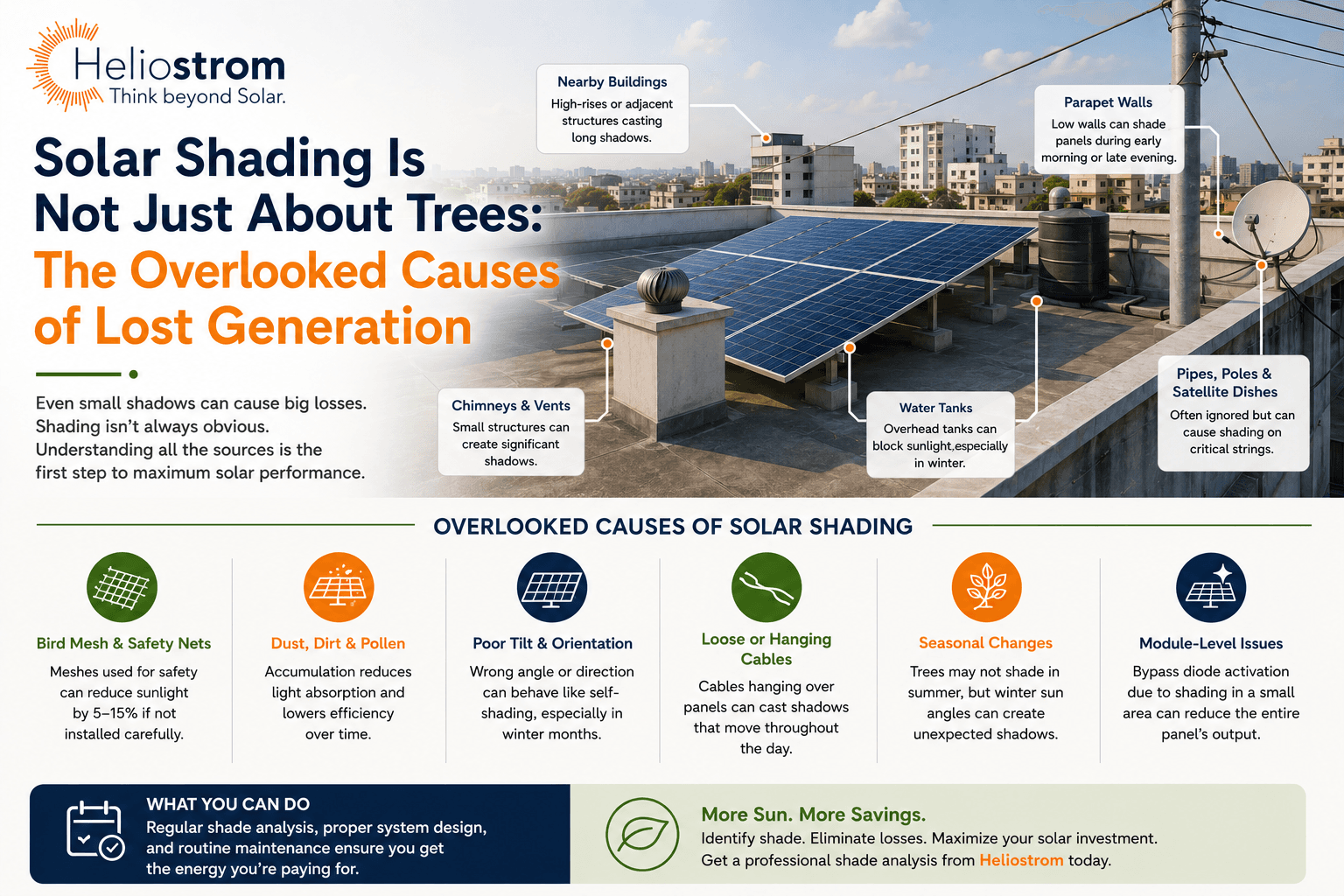
Solar shading is not limited to trees. Dust, bird droppings, nearby buildings, water tanks, rooftop equipment, inter-row shadows, and seasonal changes in the sun's position can all reduce solar generation. The actual impact depends on how much of the array is shaded, when the shading occurs, and how the panels and inverter are electrically configured.
Why a Small Shadow Causes a Large Loss
How Solar Cells Wired in Series Amplify Shading
Solar cells inside a panel are typically wired in series to build up voltage. In a conventional series-connected string, partial shading of a module can reduce the current available from the affected string, since the shaded cell effectively becomes a bottleneck for current trying to pass through the series connection. Bypass diodes and module-level power electronics can reduce how strongly that shading affects the rest of the system, which is why the actual impact varies considerably based on how a given system is wired and equipped.
What Bypass Diodes Do, and What They Do Not Fix
Modern modules typically use multiple bypass diodes to protect sections of the module from reverse-bias conditions and reduce power losses caused by partial shading. The exact configuration varies by module design. This meaningfully reduces the damage compared to older panel designs, but it does not eliminate the loss, since the bypassed section still contributes nothing to output while the diode is active. The more relevant long-term concern is hot-spot formation and module thermal stress under certain shading and reverse-bias conditions, which is a separate issue from the diode itself and worth monitoring on any partially shaded installation.
The Shading Causes Most People Never Consider
Dust, Pollution, and Seasonal Soiling
A layer of accumulated dust behaves like a very thin, uneven shadow spread across the entire panel surface rather than a single localized obstruction. Published studies have found that soiling can cause several percentage points of annual energy loss, with the actual impact varying substantially by climate, rainfall, airborne dust, panel tilt, and cleaning frequency. Chennai's dry periods, urban dust, and construction activity can make soiling a relevant consideration for rooftop solar systems, although the actual loss depends heavily on the property's surroundings and maintenance schedule.
Bird Droppings Create a Different Kind of Damage
Bird droppings can create localized shading on individual cells or cell groups and, depending on the module's electrical design and the location of the obstruction, can contribute to disproportionate power losses or hot-spot stress. Unlike diffuse dust, a small opaque obstruction can create a much more localized electrical effect. Some research has also found that the digestive fluids involved are not always fully cleared by rainfall alone, which can contribute to the risk of localized heat buildup over time on the affected cell.
Panels Shading Each Other
Rows of panels installed too close together can cast shadows on the row behind them, particularly during winter months when the sun sits lower in the sky. Installers under pressure to fit maximum capacity onto a limited roof sometimes reduce row spacing to squeeze in extra panels. Poor row spacing can increase inter-row shading enough to reduce the expected energy yield of the array, potentially undermining the benefit of fitting additional panels into the same roof area.
Nearby Structures That Change Over Time
A water tank, an electric pole, an overhead cable, or a neighboring building's water tank enclosure can all cast shadows that were never part of the original site assessment, particularly if that structure was built or modified after the solar system was installed. Chimney stacks and rooftop equipment added by a building's own occupants are common culprits too, since they rarely get flagged as a shading risk until someone notices generation has quietly dropped.
Seasonal Sun Angle Changes
A roof that looks completely shade-free during a summer site visit can face real shading during winter mornings or evenings, when the sun's lower angle sends shadows further across a roof than they reach during peak summer months. A thorough assessment should model the sun's path across different seasons and times of day rather than relying solely on a visual inspection performed on the installation date.
How Much Generation Shading Actually Costs
The energy impact of shading can range from minor to substantial depending on the size, location, timing, and duration of the obstruction, as well as the electrical configuration of the PV system. A small morning shadow on part of one panel might barely affect annual yield, while a persistent obstruction across a significant portion of an array, or a poorly designed string configuration, can cause much larger losses. Because losses compound quietly rather than announcing themselves, many owners only notice something is wrong once monitoring data or an unexpectedly high electricity bill prompts a closer look.
Identifying Shading Before It Becomes a Recurring Problem
A Proper Site Assessment Looks Beyond the Obvious
A genuine shading assessment maps sun position across every season, not just the day of the site visit, and accounts for structures that might be built nearby in the years ahead. Businesses evaluating commercial solar solutions in Chennai should ask specifically how a proposed installer plans for seasonal variation and future development around the site, since an assessment limited to current, visible obstructions alone tends to miss exactly the causes covered here.
Monitoring Systems Reveal Shading Patterns Over Time
Panel-level or string-level monitoring can reveal shading patterns that a one-time visual inspection would never catch, particularly gradual issues like accumulating dust or a slowly growing structure nearby. Reviewing generation data by time of day and season, rather than only checking total monthly output, often reveals exactly when and where shading losses are concentrated. Comparing actual production against expected production for similar weather conditions can also help distinguish shading from equipment faults or broader system performance issues.
Choosing Equipment Designed to Handle Partial Shading
Module-level power electronics, such as power optimizers and microinverters, can reduce the way shading on one module affects the electrical performance of other modules, although they cannot recover sunlight that the shaded module itself does not receive. When comparing equipment for partially shaded sites, look at a module's bypass-diode configuration, electrical characteristics, and compatibility with module-level power electronics, rather than relying on generic claims about shading performance. Panels sourced through established solar panel suppliers in Chennai that can document these specifications tend to hold up better under the partial shading conditions common on real rooftops, where a perfectly unobstructed array is rarely achievable in a dense urban environment.
Practical Steps to Reduce Shading Losses
Regular Cleaning on a Realistic Schedule
Cleaning frequency should reflect local dust and pollution levels rather than a generic, one-size-fits-all schedule, with denser urban and industrial areas typically needing more frequent attention than cleaner suburban rooftops. Cleaning is generally best done during cooler parts of the day. Avoid abrasive materials, harsh chemicals, and sudden temperature changes such as applying cold water to very hot modules, which can create thermal shock and additional safety risk.
Trimming and Monitoring Vegetation
Trees grow, so a roof that was shade-free at installation may not remain shade-free several years later. Periodic inspection and pruning of overhanging branches addresses both direct shading and the leaves and sap that fall onto panels, compounding soiling losses on top of whatever direct shadow the branches themselves cast.
Frequently Asked Questions
How much energy can dust and soiling realistically cost a rooftop system?
Soiling can cause several percentage points of annual energy loss in some environments, but the actual impact varies significantly with dust levels, rainfall, panel tilt, surrounding activity, and cleaning frequency, making regular cleaning a meaningful factor in overall system returns rather than a purely cosmetic concern.
Can shading on just one panel really affect the whole system?
In a conventional series-connected string, partial shading can reduce the current available from the affected string. Bypass diodes and module-level electronics can reduce this impact, but they do not eliminate the loss caused by the shaded area itself, which is why module-level equipment is worth considering on partially shaded sites.
Is bird dropping damage really worse than it looks?
It can be. Bird droppings can create localized shading on individual cells or cell groups and, depending on the module's electrical design and the location of the obstruction, can contribute to disproportionate power losses or hot-spot stress. Some research suggests the digestive fluids involved are not always fully cleared by rainfall alone, which can add to the risk of localized heat buildup over time.
Should shading be assessed more than once before installation?
Ideally yes, since sun angles change meaningfully between summer and winter, and a single-season site visit can miss shading that only appears during certain months. A thorough assessment accounts for this seasonal variation rather than relying on conditions observed during one visit alone.
Conclusion
Trees get blamed for shading because they are the most visible cause, but dust, bird droppings, panel-to-panel shadowing, nearby structures, and seasonal sun angle shifts often account for just as much lost generation, if not more, over a system's lifetime. Catching these factors during a proper site assessment, choosing equipment designed to tolerate partial shading, and maintaining a realistic cleaning schedule protects the return a residential solar panel installation or larger commercial system was actually designed to deliver. If your system's output has been quietly underperforming and you are not sure why, contact our solar experts for a proper shading assessment before assuming the equipment itself is the problem.
Thinking about your own installation? rooftop solar installation for homes in Chennai or book a free site survey.


