
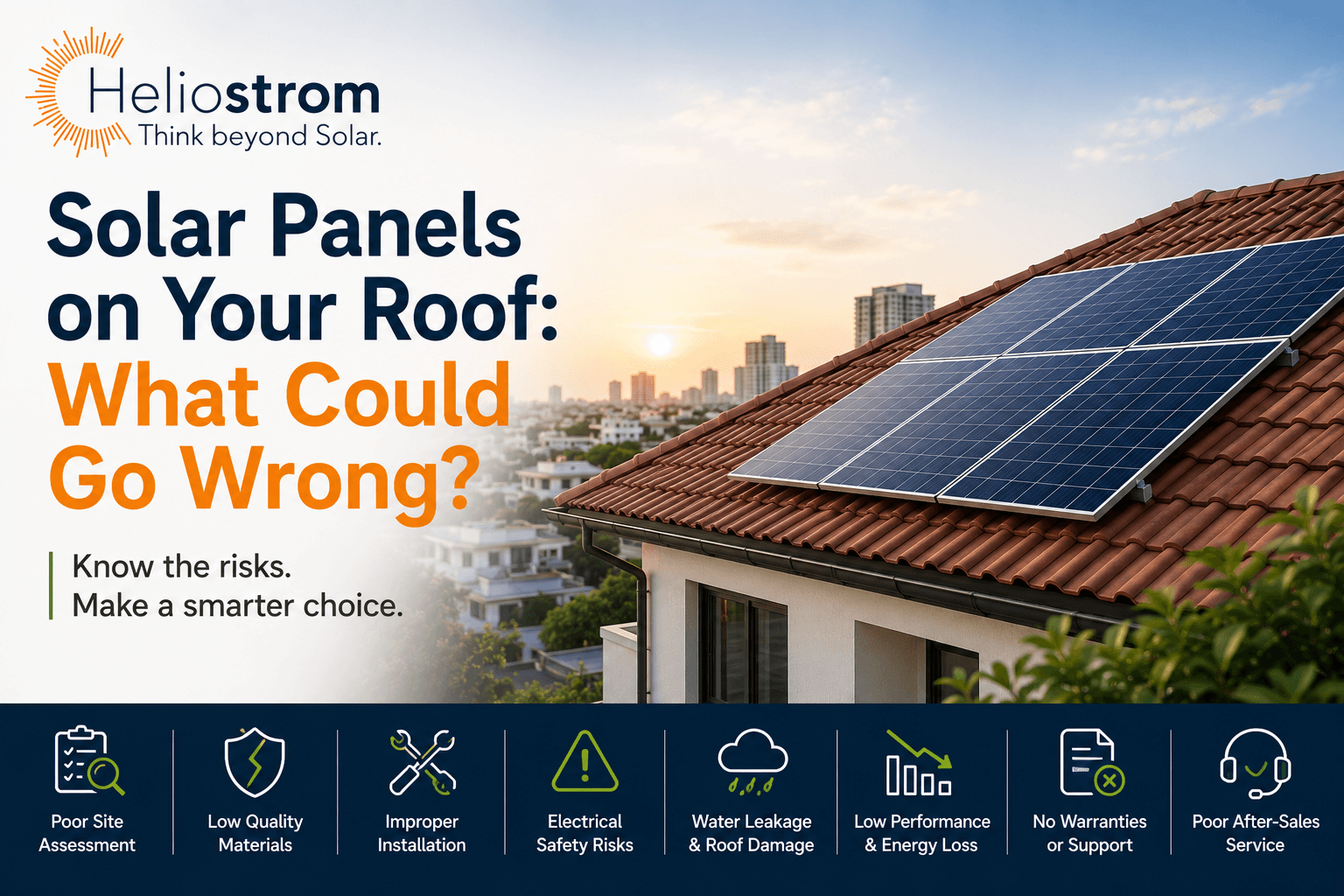
Rooftop solar promises lower electricity bills and cleaner power, and for most households in the city, it delivers exactly that. Still, a rooftop array is a long-lived structure bolted onto your home, and the way it is planned and fitted decides whether you enjoy decades of quiet savings or a run of avoidable headaches. Before you sign with any of the solar companies in chennai, it helps to understand the failure points that separate a clean, worry-free system from one that leaks, underperforms, or ages badly. This guide walks through the real risks and how a careful setup keeps every one off your roof.
The Roof Comes First, Not the Panels
A frequent mistake is treating the roof as a blank platform. If your terrace or sloped roof is near the end of its life, mounting a system meant to run for twenty-five years on top of it simply invites trouble. Water stains, cracked tiles, and weak decking rarely announce themselves until the panels are already in place and the leak has begun. A proper site survey checks the age and condition of the surface, the load it can carry, and any existing weak spots before a single bracket is fixed.
Weight and Structural Load
Panels, mounting rails, and ballast add real weight spread across your roof. Older buildings or lightly built terraces may need reinforcement to carry that load safely over the long term. A structural check tells you whether the roof needs strengthening and which mounting method suits your specific slab or metal sheet.
Roof Leaks and Water Damage
This is the risk homeowners fear most, and it is almost always about workmanship rather than the technology itself. Every bracket that pierces the roof creates a potential path for water. When those penetrations are sealed poorly, or flashing is skipped to save time, rain quietly finds its way in. Over a few months, that slow entry can rot decking, stain ceilings, and grow into an expensive repair well after the crew has left.
Careful teams treat each mounting point like a chimney penetration, using proper flashing and durable sealant. They also never leave holes open during a passing shower. On flat terraces, non-penetrating or ballasted mounts are worth considering where the structure suits them. If you are comparing quotes for solar panel installation in chennai, ask each vendor exactly how they waterproof every anchor point and whether they photograph the roof before drilling. That answer reveals their real standards.
Poor Placement and Shading Losses
A panel sitting in shade drags down the whole string it belongs to, not just itself. Water tanks, parapet walls, neighbouring buildings, and even a single overhanging branch can shave a surprising slice off your daily generation. Orientation and tilt matter just as much. In this region, a south-facing array set at the right angle can capture the most sunlight throughout the year.
Rushed designs that ignore how shadows travel through the seasons leave money on the table every single day the sun is up. A thoughtful layout maps the way shadows move from morning to evening, and from summer to winter, before deciding where each panel finally sits.
Weak Mounting and Wind Uplift
Coastal and open sites face strong seasonal winds, and a rooftop array behaves like a sail when it is not anchored properly. Undersized fasteners, wrong spacing, or low-grade rails can loosen over time as the metal expands and contracts in the heat. In the worst cases, poorly secured panels lift or shift. Mounting hardware rated for local wind loads, correct bolt torque, and corrosion-resistant materials keep the structure firmly planted through monsoon gusts. This is not the place to chase the cheapest option.
Electrical Faults and Fire Risk
Behind the glass sits a live electrical system carrying meaningful current all day. Loose connectors, undersized cables, weak earthing, and low-grade isolators are the usual causes of arcing and, in rare cases, fire. None of this is a fault of solar itself. It is the direct result of cheap parts and hurried wiring, and both are preventable with the right components and clean, labelled connections. In India, the single most common trigger is loose or mismatched MC4 connectors, the standard plug type joints between panels. Mixing connector brands or crimping them poorly creates high resistance hot spots that can arc or melt within months, so insist on matched, correctly crimped connectors from one reputable brand.
Earthing and Surge Protection
Lightning strikes and grid surges are a genuine concern during the wet season. Proper earthing and Type 1 and 2 surge protection devices shield your inverter and panels from sudden voltage spikes. Leaving them out to trim the bill is a false economy that can wipe out the entire system in a single bad storm. For coastal roofs, insist on components tested to IEC 61701 for salt mist corrosion, along with marine grade connectors that stand up to humidity and spray.
Salt, Heat, and the Local Climate
The weather here is hard on hardware. Humid, salt-laden coastal air corrodes cheap mounting bolts and connectors far faster than dry inland conditions do. High daytime heat trims panel output a little and stresses seals through constant expansion. Dust and pollution settle on the glass and silently cut generation whenever the surface is left uncleaned. Marine grade or hot-dip galvanised structures, quality connectors, and a simple cleaning habit handle all of it. Systems built with the climate in mind age gracefully, while those built to the lowest price rust and fade within a few years.
Wrong System Size
An array that is too small never covers your bills the way you hoped, while one that is too large can run into net metering limits and waste capital. Sizing should begin from your actual monthly consumption, your sanctioned load, and the usable roof area you have, rather than a round number a salesperson happens to like. It also helps to know that TANGEDCO rejects net metering applications when the proposed system capacity exceeds your sanctioned load or contract demand, so confirm your connection details before locking in the size. Here is a quick view of the common problems and the practice that prevents each one.
Thinking about your own installation? rooftop solar installation for homes in Chennai or book a free site survey.


