Table of Contents
1. Why Solar Performance Depends on More Than Just Panels
2. Understanding Energy Consumption Before Installation
3. Why Roof Design Has a Bigger Impact Than Most People Realize
4. Selecting Components That Work Together Efficiently
5. Installation Quality and Workmanship Matter More Than Expected
6. Environmental Factors That Influence Solar Performance
7. Monitoring and Maintenance After Installation
8. Common Reasons Solar Systems Underperform
9. Building a Solar System for Long-Term Reliability
10. Frequently Asked Questions
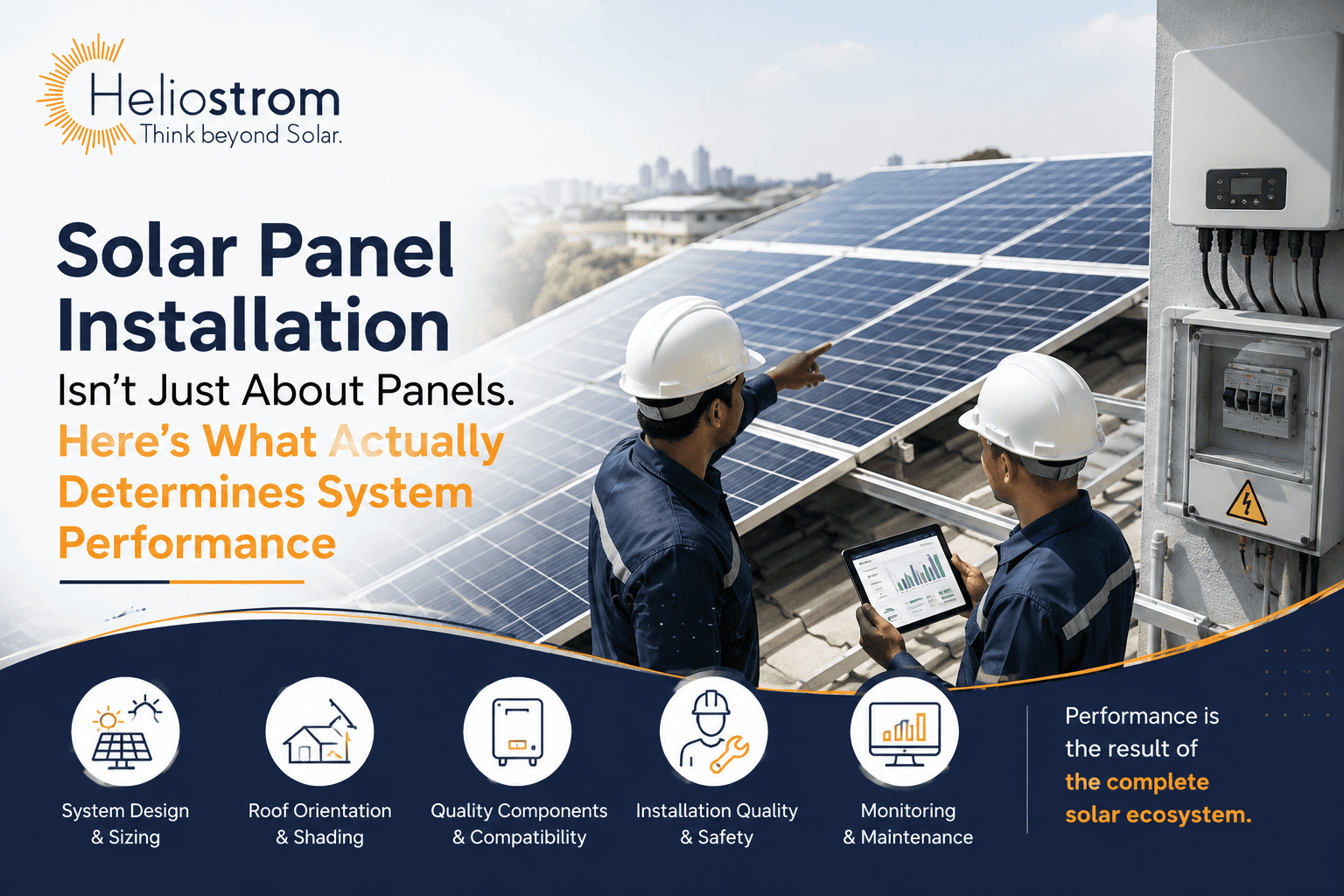
Most homeowners assume that solar performance comes down to a single factor: the quality of the panels they choose. This is understandable, since panels are the most visible part of any rooftop system. However, a well-planned Solar Panel Installation depends on far more than panel specifications alone. System design, component compatibility, roof characteristics, workmanship, and ongoing maintenance all influence how much electricity a system generates over its lifetime. Two homes with identical panels can produce noticeably different results depending on how the system was engineered and installed. Understanding this distinction matters, because it shifts the conversation from choosing the best panel to building a system that performs reliably as a complete ecosystem, year after year.
1. Why Solar Performance Depends on More Than Just Panels
A rooftop solar energy system is not a single product. It is an engineered ecosystem of panels, an inverter, mounting structures, wiring, protection devices, and the roof itself. Overall output depends on how well these parts work together, not on any single specification.
A common misconception is that higher panel efficiency ratings automatically translate into higher electricity generation. In practice, a highly efficient panel paired with an undersized inverter, poor roof orientation, or substandard installation will underperform a modestly rated panel installed correctly within a well-designed system.
This is why credible solar consultants evaluate a project holistically, starting with site conditions and consumption patterns before recommending specific hardware.
2. Understanding Energy Consumption Before Installation
Proper solar system design begins before any equipment is selected. It starts with a review of the household's electricity consumption. Analyzing past electricity bills reveals average monthly usage, seasonal variation, and billing patterns under net metering arrangements.
Daily consumption habits matter too. A home that uses most of its electricity during daylight hours will benefit differently from a rooftop solar system than one where usage peaks in the evening. Seasonal patterns, such as higher air conditioning load in summer, also affect how a system should be sized.
Future electricity needs should be factored in as well. Plans for an electric vehicle or additional appliances can change consumption significantly. A system sized only for current usage may require costly upgrades later.
3. Why Roof Design Has a Bigger Impact Than Most People Realize
Roof characteristics influence solar performance as much as the equipment installed on them. Roof orientation for solar panels determines how much direct sunlight the array receives through the day. South-facing roofs typically receive the most consistent exposure, though east or west orientations can still work well with adjusted system design.
Roof tilt affects how efficiently sunlight strikes the panel surface across seasons. A tilt suited to summer generation may not be optimal for winter, so installers often calculate an angle that balances annual output rather than peak-season performance.
Available installation space limits how many panels can be accommodated, which directly affects system capacity. Shading from neighboring buildings, water tanks, or trees can significantly reduce output, even if only a small section of the array is affected, because shaded cells can limit the performance of an entire string.
Structural integrity matters too. A roof must be assessed for its ability to safely bear the added load of mounting structures over the system's operational life, which typically exceeds two decades.
4. Selecting Components That Work Together Efficiently
A dependable solar energy system depends on component compatibility rather than simply selecting premium parts in isolation. Solar panels must be matched with a solar inverter rated appropriately for the array's voltage and current characteristics. An undersized inverter clips peak output, while an oversized one adds unnecessary cost without improving performance.
Mounting structures need to suit the specific roof type, whether flat concrete, sloped tile, or metal sheet, since incorrect mounting affects both safety and generation angle. Protection systems, including surge devices and earthing, safeguard the system against electrical faults.
Wiring quality affects transmission losses, since undersized cables or poor connections reduce the electricity that reaches the inverter and the grid. This is why reputable providers of Home Solar Installation services focus on balanced system design rather than promoting the most expensive components by default. A well-matched system, where every part is chosen to work with the others, consistently outperforms one built from individually impressive but mismatched parts.
5. Installation Quality and Workmanship Matter More Than Expected
Even a well-designed system can underperform if installation quality is poor. Proper panel placement ensures consistent spacing, correct tilt angles, and secure mounting that can withstand wind loads over time.
Cable routing affects both safety and efficiency. Cables should be protected from UV exposure, physical damage, and moisture, with clearly labelled runs that simplify future maintenance. Waterproofing at roof penetration points is critical, since a poorly sealed mounting point can lead to leaks long after installation.
Electrical safety practices, including correct earthing, breaker sizing, and adherence to local wiring codes, protect both the household and the system itself. A thorough final inspection, covering electrical continuity, insulation resistance, and structural checks, should precede commissioning. Skipping these steps to save time often leads to performance issues that surface months or years later.
6. Environmental Factors That Influence Solar Performance
Local climate conditions have a measurable effect on solar performance. In a city like Chennai, high ambient temperatures can reduce panel efficiency slightly, since photovoltaic cells generally perform better in cooler conditions despite abundant sunlight.
Dust accumulation is another practical concern in coastal and urban environments, where airborne particles settle on panel surfaces and gradually reduce light absorption if not cleaned regularly. Seasonal weather changes, including the monsoon period, affect both generation levels and maintenance frequency.
Ventilation beneath the panels also plays a role. Adequate airflow between the panel and roof surface helps dissipate heat, supporting more stable performance during peak summer months. These realities are why system design should always account for local conditions rather than generic assumptions.
7. Monitoring and Maintenance After Installation
A solar monitoring system allows homeowners and installers to track energy generation in real time, compare it against expected output, and identify irregularities early. Consistent monitoring data helps confirm that the system is performing as designed across different seasons.
Cleaning schedules should be set based on local dust and pollen levels, since accumulated grime can reduce output gradually without obvious signs. Preventive maintenance, including checks on wiring, connectors, and mounting hardware, helps catch minor issues before they turn into costly repairs.
Detecting faults early, such as a single underperforming panel or an inverter fault, prevents small problems from affecting the entire system's output. Regular solar panel maintenance is one of the most cost-effective ways to protect the return on investment made at installation.
8. Common Reasons Solar Systems Underperform
Several recurring issues explain why some solar installations fail to meet expected generation figures. Incorrect system sizing, based on inaccurate consumption estimates, is among the most common causes of disappointing results.
Roof shading that was not properly assessed during the solar site assessment can reduce output more than expected, particularly as trees grow taller over time. Poor installation practices, such as incorrect panel angling or loose electrical connections, create inefficiencies that are hard to diagnose without proper testing equipment.
Equipment mismatch, including inverters that do not suit the panel configuration, limits how much generated electricity can actually be used or exported. A lack of maintenance allows preventable issues, such as dust buildup or minor faults, to accumulate and gradually erode performance.
9. Building a Solar System for Long-Term Reliability
A solar energy system is a long-term investment, typically expected to perform for twenty-five years or more. Planning for future electricity needs during the initial system design helps avoid costly modifications later.
Choosing durable equipment, backed by manufacturer warranties and proven field performance, reduces the likelihood of premature component failure. Following engineering best practices during installation, rather than shortcuts, protects both safety and output over the system's lifespan.
Periodic performance evaluation, comparing actual generation against expected benchmarks, helps identify gradual efficiency losses before they become significant. This ongoing attention is what separates a system that merely functions from one that consistently delivers value. For homeowners evaluating providers, understanding the full Solar Installation Process, from site assessment to commissioning, is a useful way to judge whether a company can deliver long-term reliability.
Conclusion
Solar performance is the outcome of proper planning, sound engineering, quality installation, and consistent maintenance working together. No single factor, including panel choice, can compensate for weaknesses elsewhere in the system. Homeowners who understand this are better positioned to evaluate proposals critically rather than focusing on panel wattage alone. For a detailed assessment of your roof and electricity needs, Contact our Solar Experts to discuss a system designed around your specific requirements.
10. Frequently Asked Questions
Do expensive solar panels always produce better results?
Not necessarily. Panel price often reflects efficiency and build quality, but actual output depends on correct sizing, roof suitability, component compatibility, and installation quality. A moderately priced panel installed correctly within a well-engineered system can outperform a premium panel installed poorly.
How much does roof orientation affect solar performance?
Roof orientation significantly affects how much direct sunlight an array receives. Orientations that maximize daily sun exposure generally produce more consistent output, though installers can adjust system design to work with less ideal orientations, often with some reduction in generation.
How often should a solar system be maintained?
Most residential systems benefit from panel cleaning every few months, depending on local dust levels, along with a professional inspection at least once a year to check wiring, connections, and inverter performance.
Thinking about your own installation? rooftop solar installation for homes in Chennai or book a free site survey.


