
Table of Contents
1. Why More Chennai Homeowners Are Choosing Solar
2. The Real Cost of Waiting to Install Solar Panels
3. Why Solar Is One of the Smartest Home Investments
4. Benefits of Professional Solar Panel Installation
5. Is Your Home Ready for Solar?
6. Common Solar Installation Mistakes to Avoid
7. How to Choose the Right Solar Installation Company
8. What Happens During the Installation Process?
9. Conclusion
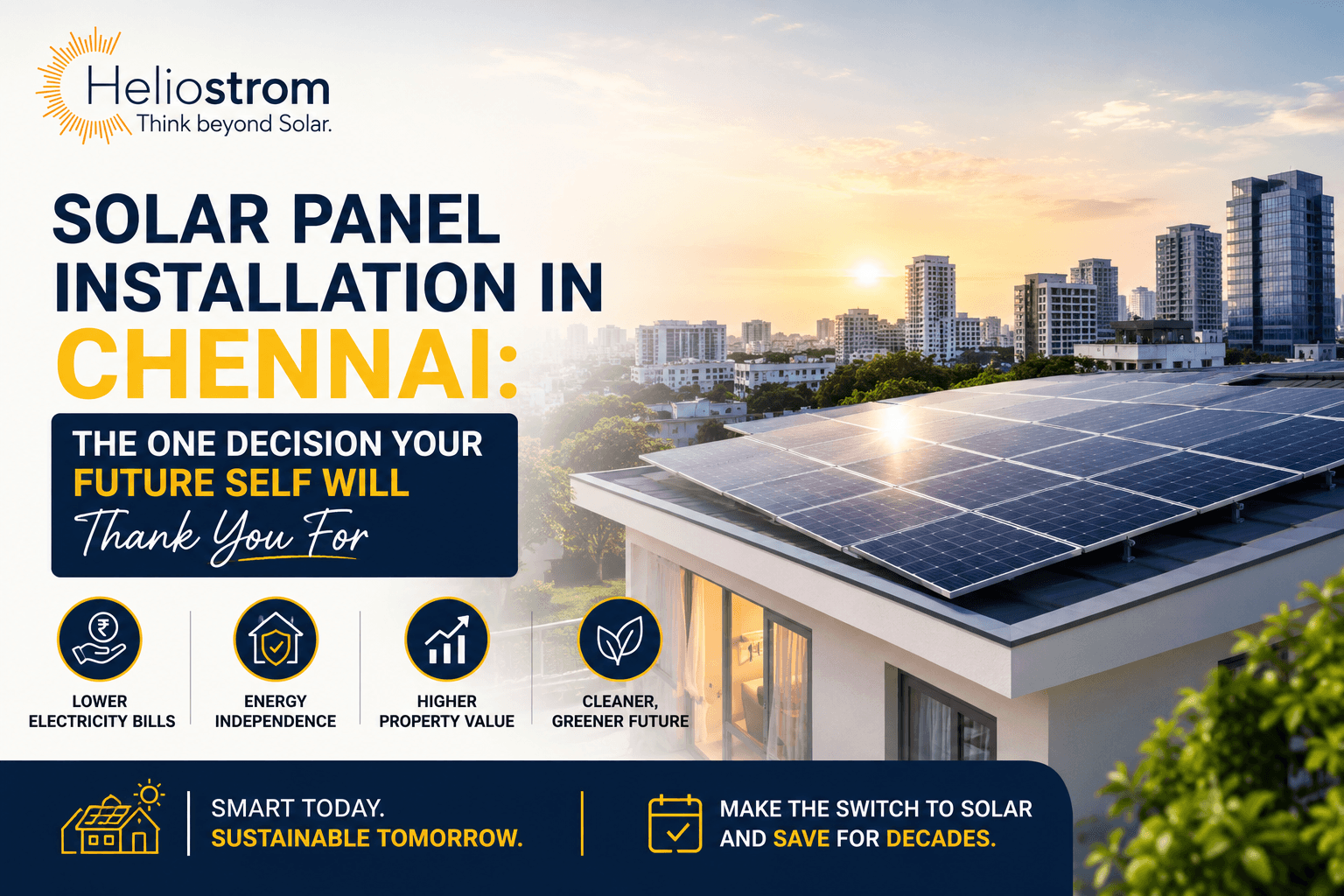
With electricity costs steadily increasing and homeowners looking for smarter ways to reduce monthly expenses, Solar Panel Installation in Chennai has become one of the most valuable home improvements available today. Beyond lowering electricity bills, a professionally installed solar system offers long-term financial savings, energy independence, and increased property value.
If you're considering going solar, understanding the installation process and making informed decisions today can deliver benefits that last for decades.
1. Why More Chennai Homeowners Are Choosing Solar
Chennai's Excellent Solar Potential
Chennai enjoys abundant sunshine through most of the year, with relatively few extended cloudy spells outside the monsoon months. This climate advantage means rooftop solar systems in the city consistently generate strong output, making solar one of the most efficient home upgrades available to homeowners here.
The city's flat terrain and predominance of independent houses and villas with open rooftops also make installation straightforward for most residential properties, without the shading or space constraints common in denser urban environments. This reliable sun exposure is part of why solar has moved from a niche interest to a mainstream home upgrade across the city.
Why Residential Solar Adoption Is Growing
Awareness of solar's long-term value has grown considerably as more homeowners see neighbours and relatives benefit from lower EB bills. Long-term savings remain the biggest driver, since a well-designed system can offset a significant share of a household's monthly consumption. Government incentives, including net metering policies that allow homeowners to feed surplus power back to the grid, have also made the transition more financially attractive.
2. The Real Cost of Waiting to Install Solar Panels
Electricity bills for residential consumers have risen steadily, and every month without solar is a month of savings left on the table. Delaying installation also delays the point at which a system starts paying for itself, pushing the entire ROI timeline further out.
There is a practical cost consideration too. Equipment prices and installation costs can shift over time due to material and import factors, so homeowners who lock in a system now protect themselves against future price movements while starting to save immediately. Every billing cycle without solar is essentially a payment toward an expense that a properly sized system could largely eliminate.
3. Why Solar Is One of the Smartest Home Investments
Lower electricity bills are the most immediate benefit, often reducing monthly EB costs substantially depending on system size and household consumption. Beyond savings, solar offers a degree of energy security, reducing a household's exposure to tariff hikes and supply disruptions.
Property value is another consideration that homeowners frequently underestimate. Homes with installed solar systems are increasingly seen as more efficient, lower-maintenance assets, which can be an advantage when it comes time to sell or lease. Over a 25-year system lifespan, the combination of savings and reduced future tariff exposure typically delivers strong long-term returns.
These benefits compound over time, which is why homeowners who install early tend to see the greatest lifetime value from their system. A household that installs today begins accumulating savings immediately, while a household that waits five years not only misses those years of savings but also starts its own payback clock five years later.
4. Benefits of Professional Solar Panel Installation
- Proper System Design: A professional installer designs the system around your roof's orientation, shading, and household consumption for maximum efficiency.
- Maximum Generation: Correct panel placement and quality components ensure the system generates as close to its rated capacity as possible.
- Safe Installation: Certified installers follow electrical and structural safety standards, reducing risk to your home and family.
- Warranty Protection: Professional installation typically comes with manufacturer and workmanship warranties that protect your investment.
Long-Term Performance: A properly installed system built from quality residential solar systems requires less troubleshooting and performs reliably for decades.
DIY or unqualified installation may look like a way to save money upfront, but poor workmanship often shows up later as reduced generation, roof leaks, or safety issues, all of which cost far more to fix than professional installation would have cost in the first place.
5. Is Your Home Ready for Solar?
Roof condition is the first thing to evaluate. A structurally sound roof with several years of remaining life is ideal, since re-roofing after panels are installed adds unnecessary cost. Available roof space determines how large a system you can install, which in turn determines how much of your consumption can be offset.
Electricity usage patterns matter as well. Homes with higher daytime consumption typically see faster payback. Roof orientation, ideally facing south for consistent sun exposure in Chennai, and minimal shading from trees or neighbouring structures both significantly affect generation output.
A short site visit from a qualified installer can usually answer most of these questions at once, giving homeowners a clear picture of feasibility before any financial commitment is made.
6. Common Solar Installation Mistakes to Avoid
Choosing the cheapest installer without checking their track record often results in underperforming systems and avoidable repair costs. Installing the wrong system size, either too small to meaningfully offset bills or too large for actual consumption, wastes money either way.
Ignoring an installer's experience and certifications is a common oversight that can affect both safety and long-term performance. Homeowners should also plan for maintenance from the outset rather than treating it as an afterthought, since even low-maintenance systems benefit from periodic cleaning and inspection.
Avoiding these mistakes usually comes down to spending a little more time on due diligence upfront, comparing quotes on equipment and workmanship rather than price alone, and asking installers for references from past residential projects.
7. How to Choose the Right Solar Installation Company
Experience should be the first filter when choosing a company. Look for an installer with a demonstrated history of completed residential rooftop installation projects in Chennai's climate. Certifications matter too, as they indicate the installer follows recognised safety and quality standards.
Ask about the components used, since panel and inverter quality directly affects long-term performance. Genuine customer reviews offer useful insight into real-world reliability, and ongoing support after installation, for monitoring, troubleshooting, and maintenance, is just as important as the installation itself.
A trustworthy installer will walk you through system sizing, expected generation, and warranty terms clearly, rather than pushing you toward the largest system possible regardless of your actual household needs.
8. What Happens During the Installation Process?
The process begins with a site inspection to assess roof condition, orientation, and shading. Based on this assessment, engineers prepare a system design tailored to the home's energy consumption and available space.
Installation follows established safety protocols, after which the system is tested to confirm it performs as designed. Once testing is complete, the system is connected to the grid, and monitoring tools are set up so homeowners can track generation and savings in real time. This ensures the transition to solar energy for homes is smooth from day one and continues delivering reliable output for years afterward.
A well-managed installation typically moves from initial inspection to grid connection within a defined timeline, giving homeowners clarity on when their savings will actually begin. Clear communication at each stage, from design approval through to final commissioning, helps avoid delays and ensures the finished system matches what was originally agreed upon.
9. Conclusion
Solar panel installation delivers long-term value that extends well beyond the initial investment, from lower monthly bills to greater energy security and improved property value. The homeowners who benefit most are typically the ones who act early, locking in savings sooner and avoiding the rising costs that come with delay.
Every year of delay is a year of savings a household will never fully recover, which is why so many Chennai homeowners describe going solar as a decision their future selves are grateful for.
If you're ready to make an informed decision about your home's energy future, get in touch with Heliostrom for a professional site assessment and a system designed around your home's specific needs.
FAQs
1. How much roof space is required?
Requirements vary based on household consumption and panel type, but most homes have sufficient space for a system that meaningfully offsets their electricity bills.
2. How long do solar panels last?
Quality solar panels typically come with performance warranties covering 25 years, with many systems continuing to generate reliably well beyond that period.
3. Can solar panels work during cloudy weather?
Yes, panels continue generating electricity during cloudy conditions, though output is lower than on clear sunny days.
Planning solar for your home? rooftop solar installation for homes in Chennai or get a free solar quote.


